Join The Community





I've spent the last two years running two D&D Curse of Strahd campaigns simultaneously, because I have absolutely no chill. But in my defense, it's easily one of the best Dungeons & Dragons storylines around – which is why I'm not surprised it continues to be amongst the most popular modules a decade after it was first published.
Seeing as the adventure is turning 10 this month and still feels as beloved as ever (to the point that it's something of a rite of passage for many groups running the best tabletop RPGs), I thought it might be helpful for Dungeon Masters about to run the campaign to list what I've learned from my time leading many, many Curse of Strahd sessions. Learn from my mistakes, everyone!
1. Make sure you have clear notes of what happens, when

Even though it's easily one of the best D&D books, Curse of Strahd isn't perfect. It isn't laid out in the most comprehensive way for Dungeon Masters actually running the experience, and finding character info or lore is an active headache. That's why your chief weapon when leading a CoS campaign is good notetaking.
For starters, I'd highly recommend having NPC info (motivations, goals, secrets, any roleplay advice, etc) to hand when your party enters the relevant area. You'll save yourself a lot of hassle that way, and you'll avoid having to flip back and forth through the sourcebook.
In much the same way, I ended up having pertinent quest or lore info for each area to hand on note cards when the party visited. Because there are so many storyline threads and sidequests available at every turn (some of which trigger important events), it's easy to miss them unless you're well prepped. That meant I could quickly catch myself up on whatever I needed as soon as my players arrived in a location.
I use faux-leather notebooks (like this one for a reduced $14.99 at Amazon)

2. Take a look at bonus material

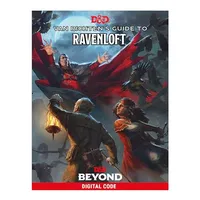
It's certainly not essential, but if you want a complete picture of Barovia, I'd grab Van Richten's Guide to Ravenloft (available for $29.99 at Amazon) before starting your adventure. Besides giving player subclasses and species that fit in with the overall tone very nicely, it fleshes out the realm with extra enemies and organizations that can be added to the plot. The Priests of Osybus make great additions to hubs such as Vallaki, for example. And if nothing else, all that context helps with making Barovia feel real to both you and your party.
In much the same way, certain additions - like the props mentioned in my guide to essential Curse of Strahd additions - will help set the tone too. There's nothing more immersive than breaking out an actual Holy Symbol of Ravenkind from the Beadle & Grimm's pack ($30 at Amazon) or unveiling a hand-crafted Sunsword when your party finally locate it, for instance. It gives players something from the game-world they can actually hold in their hands, marrying together their experience with their character's. It also provides a moment they're unlikely to forget. When the heroes tracked down the Sunsword in one of my games, I paused my description of the weapon and said "I suppose it looks something like this." I then pulled the hilt from a bag and handed it over, to the tune of Keanu Reeves-style woahs.
3. Use mods

As I mentioned above, CoS isn't the best-organized campaign – nor does it dedicate as much attention to certain plotlines or backstories as it could. That's why I'd highly recommend checking out a couple of(incredibly popular) modifications for the adventure. MandyMod at Reddit is a great place to start, as it provides lots of helpful additions and advice for every chapter of the book without totally overhauling it. I used so much from MandyMod's notes in my own sessions, and they're a godsend.
If you want a more extensive edit, complete with all-new areas and encounters to explore, DragnaCarta's "Curse of Strahd: Reloaded" guide is the place to go. I cherry-picked an awful lot from there alongside MandyMod's edits and my own alterations to supercharge my CoS campaign, and it's made a huge difference.
4. Preplan key plot points rather than randomizing them

Although the randomized elements of CoS (where you find quest items and vital allies are decided by your "Tarokka card reading" early on) make it very replayable, I'd suggest… well, stacking the deck in your favor and not randomizing things. Deciding ahead of time where everything will be and drawing the appropriate cards by "chance" makes for a more focused and satisfying experience, particularly if it sends your party to areas they might not otherwise visit.
In much the same way, I'd decide ahead of time which dark vestiges (evil spirits that seek to corrupt your players throughout the campaign) will tempt which character. Not only does this allow you to properly lay the groundwork for one hell of a twist later on, it saves you doing unnecessary juggling during play.
5. Use Strahd often

Most campaigns have a "Big Bad Evil Guy" you don't meet until the end of the campaign, but not Curse of Strahd. In CoS, you're advised to use the vampire often – and you really, really should (even though it's easy to forget). Barovia is Strahd's playground, and he's a kid with a magnifying glass over a colony of ants. Make sure you let him check in with the party regularly, even if it's just to antagonize or judge them. This builds him up as a fully-rounded character far better than any lore or backstory can. Don't miss that opportunity.
For more tabletop recommendations, don't miss the best board games or the best card games.

You must confirm your public display name before commenting
Please logout and then login again, you will then be prompted to enter your display name.