


The Famicom was already a success in Japan by the time Nintendo considered bringing it worldwide as the NES, but in the wake of the Atari crash, its fortunes in the US were by no means assured. While Wikipedia shows that the NES launched in the US in 1985, that was effectively just for a test market in New York City, and Nintendo of America was fighting hard against its own budget to get the console off the ground.
Last year, a handful of Nintendo of America's earliest employees joined a panel at the Portland Retro Gaming Expo to talk about their experiences launching the NES. While the company was technically headquartered in Seattle, Washington, several key employees also worked out of a warehouse in Hackensack, New Jersey in order to support the test launch in New York City. This warehouse, it seems, was not a great working environment.
"They would tell me that there were snakes in the bathroom," Gail Tilden, who was at the time NOA's advertising manager, says. "I often was staying in the city with the ad agency, but then when I would come out, I couldn't go to the bathroom all day because they would tell me that there were snakes and rats in the bathroom."
"They were just garter snakes," according to Bruce Lowry, who was then NOA's vice president of sales. "They weren't anything that were going to bite you." Clearly, the company's facility budget wasn't particularly robust, but it seems the advertising budget wasn't much better. This is why Nintendo of America had to start doing barter advertising – an established practice that the company would return to years later.
With barter advertising, "you say 'we'll give you our advertising dollars if you will do X,'" Tilden explains. "That's kind of what we did with Toys R Us. 'We're going to place our advertising dollars with the agency you own and you're going to carry our product.' With Pokemon, we did the same thing. We used Nintendo's advertising dollars to get the show on the air in 80 markets to kick off the launch of Pokemon and [that] was a big contributor to the success."
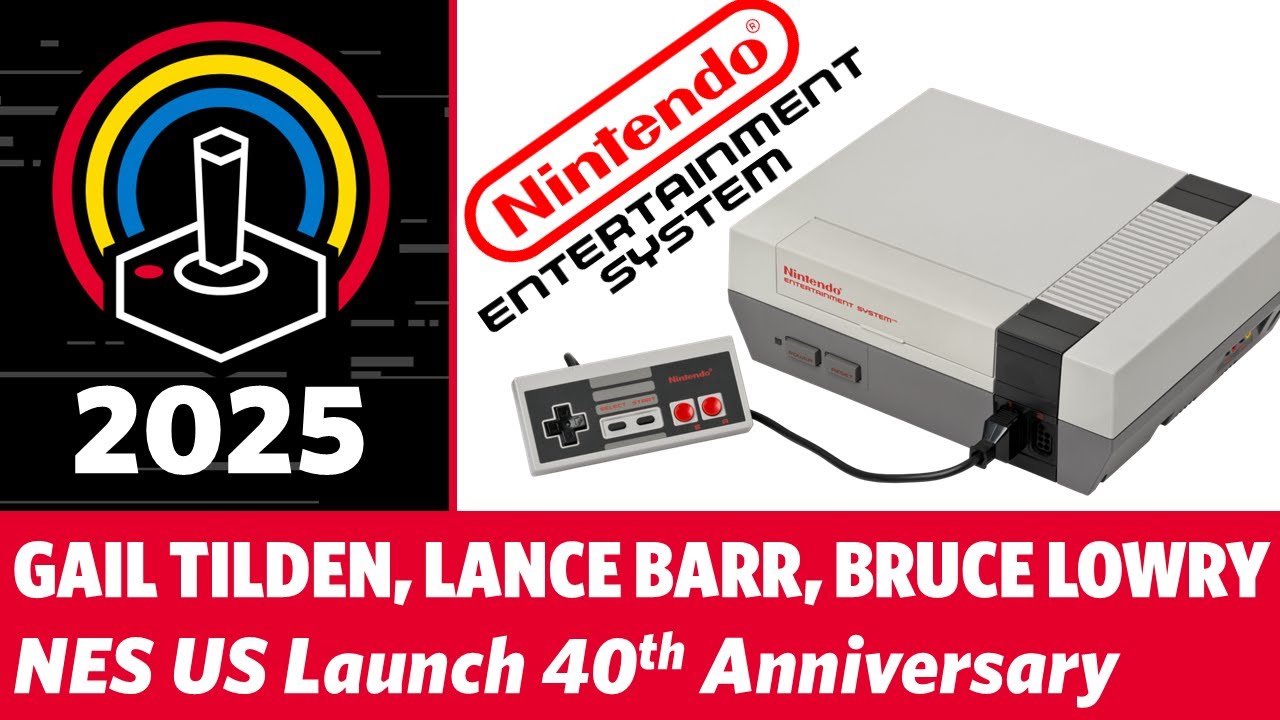
In 1985, "we didn't have a lot of money at Nintendo, so we bartered for TV time," Lowry explains. For NOA's deal with Toys R Us, he says that the company's contact would "buy the time for us and we'd give them cartridges or games and then he'd sell those to Toys R Us. That's how that whole thing worked. It was kind of crazy." But it wasn't quite so "crazy" as the literal bartering Lowry was about to do to make sure kids actually saw Nintendo's TV commercials.
"What happened was our ads started running at 2am in the morning," Lowri says. "There weren't a lot of kids awake at that point – or even parents awake." So he decided to go over to WABC, the flagship New York City network of ABC. "I just said, 'I'll go over there and talk to this guy, the boss there, and tell him he has to change that,' naive as I was," Lowry says.
"I walked in with a game cartridge and everything and said, 'I'd like to see your station manager. I'm an advertiser.' Now, I didn't mention the fact we were bartering and how we were getting our ads in there. They would not let me in. You're not getting past these six women who probably know death holds. You're not going to go past them. At which point, this limousine pulls up and a guy hops out and he has his top coat on. He runs in. He glances over. 'What's that?' I said, 'Oh, it's the new Nintendo. We advertise with you.' Well, he fell for it and he goes, 'Well, come on in. Let's see it.'"
Lowry explained NOA's barter arrangement to this unnamed network executive, and explained that "that's why we're airing at the time we're airing. I said, 'Do you have kids?' 'Yeah.' 'Take [the Nintendo game] home and see what they think about it.' So I gave him one."
The next day, Lowry got a call that the network wanted to see him again, because that executive had "more friends that want game systems." So "we drove over there and gave him some more and gave him some more. Now our commercials got to be on at 11 o'clock at night. A little better."
Obviously, an 11pm commercial still isn't prime advertising time, but things would soon get better – if only thanks to good fortune. Somewhere in this timeframe, Lowry visited a local bar where an NFL game was being shown on TV. "It was a Monday night game, the [New York] Giants playing somebody," he explains. "It was a big game, and they came on and they had a Chevrolet commercial. I guess they hadn't sold the spot for a local spot."
That's when Nintendo's ad showed – right in the middle of a major broadcast for one of the area's biggest sports teams, giving the NES a massive platform in front of exactly the New York audience the company was trying to court. "They threw it on there and the next day things started moving," Lowry says. "That was pure luck."
Out of this crucible came the best NES games of all time.

