





For close to two decades, BlizzCon has acted as an annual State of the Union address for Blizzard Entertainment. An opportunity for five core teams to deliver their vision for the future of Diablo, Overwatch, StarCraft, Warcraft, and more. Now, as the publisher turns its attention to 2024, Blizzard president Mike Ybarra says that a key priority is to outline "the Blizzard we are today, and the Blizzard we are becoming."
How that manifests through each of the core franchises is fascinating. For Warcraft, the development teams are promoting a philosophy of transparency as they look towards milestone anniversaries. The Diablo group is investing in continuous branches of iteration and evolution, working to lay the foundation for its future. Following a divisive launch, the Overwatch division is taking risks and chasing fast feedback.
In my conversations with key creative leaders across the company, the future presented is positive and player-centric. Blizzard says that it wants to give its communities more of what they want and faster, a somewhat radical departure for a company best known for moving slowly and secretively. "We are trying to pay more attention to what players want, and delivering on that more consistently," says Warcraft production designer Micheal Bybee.
Investing in players
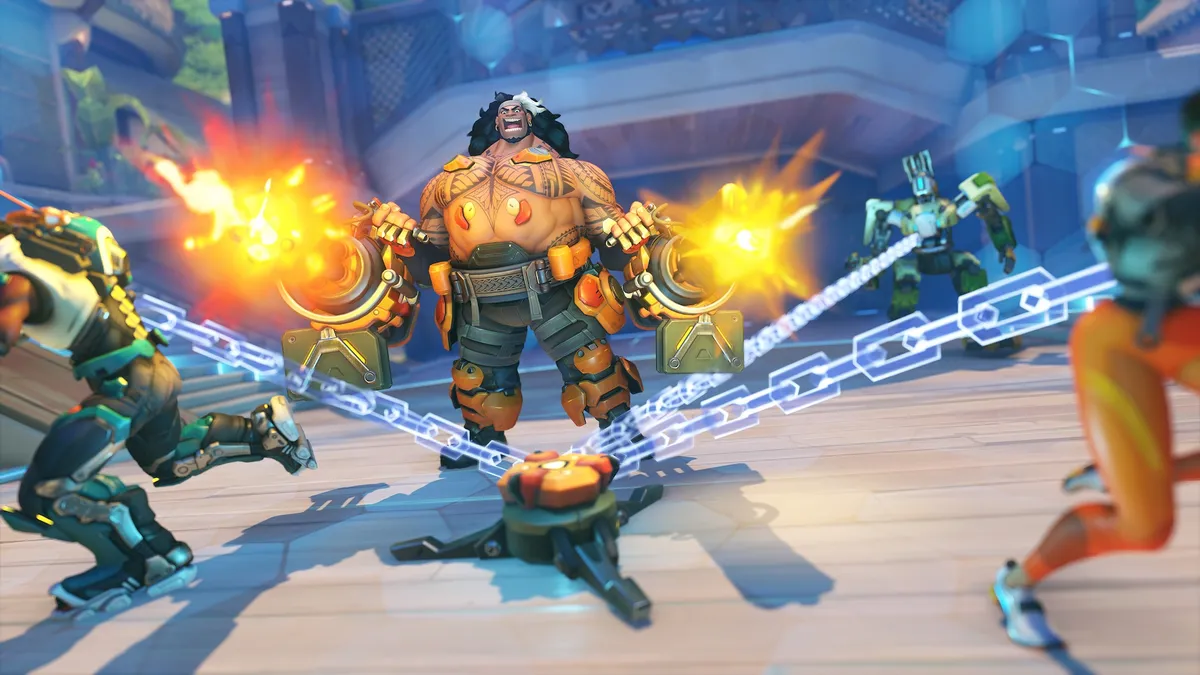
That initiative didn't begin at BlizzCon, but it was presented cleanly for all to see. World of Warcraft detailed its next three expansions, with Blizzard promising that the Worldsoul Saga will eschew the biennial release structure the MMO has rigidly followed since the 2008 release of Wrath of the Lich King. With Diablo 4, the team has committed to a challenging schedule of free quarterly seasons and premium annual expansions. Overwatch 2 has already put forth its next three heroes, and outlined massive changes coming to its competitive systems in 2024.
A more visible outline for the future means players should be more confident of what's coming next, a move which also works to quell disappointment that may be derived from an update failing to target your preferred style of play. Not interested in the Overwatch 2 tank arriving in Season 8? Damage and support heroes are coming soon after. Bybee points to the clear roadmaps the Warcraft team published in support of Dragonflight as a model for success. "I think it built a lot of trust. We said we were going to do something and then we pulled it off. Every time we launch a new patch, we immediately put the next one on the PTR. We're going to continue doing this. I feel really good about it."
I'm told that this push for greater transparency is a key initiative throughout Blizzard. "We're all moving in the direction of being more open and more responsive; actually listening to players and giving them what they want as quickly as we can," says Jared Neuss, executive producer and vice president for Overwatch 2. "As a longtime player of Blizzard games, I've always wanted things to move a little faster – there's always that waiting period. But our communications are orders of magnitude different than they were back in the day. We're trying to talk to players more frequently and informally."

"Your voices matter, they help us develop the game"
Brent Gibson, associate game director
Neuss isn't the only member of senior Blizzard leadership who expresses a desire for "there to be a dialogue" with players, but nowhere is this better represented than with Diablo 4. Barely a week goes by without the action-RPG shifting the balance of power within Sanctuary. The team is drawing from mountains of data to help make these calculations, but it isn't the only metric. "I can't stress this enough," begins Brent Gibson, associate game director for Diablo 4. "Your voices matter. They help us develop the game. We have a creative vision, which is great, but it's not as good as the feedback that we're seeing from our community – it's influencing a lot of our decisions moving forward."
It's not just talk either. "Our patch notes for Season of Blood were over 14,000 words long, because that is how much our community has influenced and will continue to influence the evolution of Sanctuary," says Diablo general manager Rod Fergusson. That ranges from small bug fixes to wider changes, such as decreasing the leveling journey to 100 by 40%. Gibson says it's the trust between development team and community that is empowering Blizzard to "start openly talking about things" like new featuresets in Season Three and the Vessel of Hatred expansion – "even though we might be a little vague from time to time when we do."
Looking ahead

Blizzard is excited by the prospect of presenting wider visibility on what it is working towards, but such action necessitates trust. Players need to trust that Blizzard is in a position to deliver what it promises, and the teams need to trust that the players will be understanding should plans change throughout development. That's a challenge the Warcraft team will be acutely cognisant of as it works towards The War Within, Midnight, and The Last Titan. "Chris Metzen stands up there, he makes this big exciting announcement, outlines where we're going, and now we have to pay that off," says Gibson. "There's definitely pressure associated with that."
"In the past, when we announced an expansion like Battle for Azeroth, we already knew that we're working on Shadowlands next. So internally, it's not necessarily all that new – but now the players know what we know," says Sean McCann, senior game designer for World of Warcraft. He tells me that there are multiple benefits to clearer signposting. It builds stronger bonds with a highly-engaged community, allows for long-term iteration on new evergreen features through player feedback, and unlocks the ability to more forthrightly lay seeds for future story developments.
But like Gibson says, there is pressure here – Blizzard has to get this three expansion run right, because if it needs to pivot at any point in the journey, it'll have to do so in full view of the playerbase. "It's an absolutely huge risk, but we owe it to our players," says Holly Longdale, executive producer and vice president for World of Warcraft. "This is a really unique and rare opportunity, and the constant feedback we are going to get will be incredible. This is the most fun I've had in this job for a really long time, because the journey is going to be so long lasting, and the players can see it."

"It's an absolutely huge risk, but we owe it to our players"
Holly Longdale, executive producer
The 'Blizzard we are today' is a developer attempting to realign itself with its communities, a company-wide effort for greater communication and transparency. The 'Blizzard we are becoming' could well be dependent on Microsoft Gaming. The platform holder recently closed its $69 billion dollar acquisition of Activision Blizzard and there are a lot of unanswered questions going into 2024. But the mood across the portfolio appears genuinely positive, in both conversations I've had on and off the record with senior leadership. There's clearly a desire to better understand how each game will factor into Xbox Game Pass next year, and what the workload may be like with respect to reviving legacy titles for the subscription service.
But on the whole, the leaders behind Diablo 4, Overwatch 2, and World of Warcraft are keen to see how the creative and financial backing of Microsoft will take these games to the next level – building off of what was put forward at BlizzCon as the world looks towards 2024.
"Looking ahead to these next three expansions, we're going to take what we're learning and really invest it back in the game, and the team is pretty energized by that," says Longdale. "We have a lot of great support from Mike Ybarra, and we all want to talk to Microsoft to see what other opportunities we can get. We haven't had the chance to talk to them about that yet, but we're so excited by it. There's a huge amount of potential to unlock things for us even further."

