Join The Community





I'm not the only one sweating about the Steam Machine featuring just 8GB VRAM, but it might not actually be a big deal. At least, it won't be if a new Linux memory management proposal by Valve engineer Natalie Vock is anything to go by, as it could help GPUs with entry-level specs and the company's own devices boost fps thanks to good old optimization.
Currently working within Valve's Linux graphics driver team as an independent contractor, the 21-year-old developer has developed two kernel patches and accompanying utilities that specifically combat memory management. In her blog post, the computer science student jokes that "Carnage erupts inside the kernel driver as every application fights for as much GPU memory as it can hold on to," before jokingly proclaiming, "That is, until now. Because I fixed it."
Article continues below 
That's the main solution proposed by Vock that makes use of cgroups (short for Device Memory Control Groups), which can instruct Linux to protect specific processes. That saves anything gaming-related from being evicted from VRAM and sent to a system memory reserve known as GTT (Graphics Translation Table), which is far slower to access (256GB/s bandwidth vs 16GB/s at best).
In tests, this resulted in Cyberpunk 2077 using just 6GB VRAM rather than the full 8GB available. That's because it was spilling 1.37GB into that slow GTT bucket, but after putting dmemcg-booster and the kernel patches into action, the RPG has access to 7.4GB GPU memory.
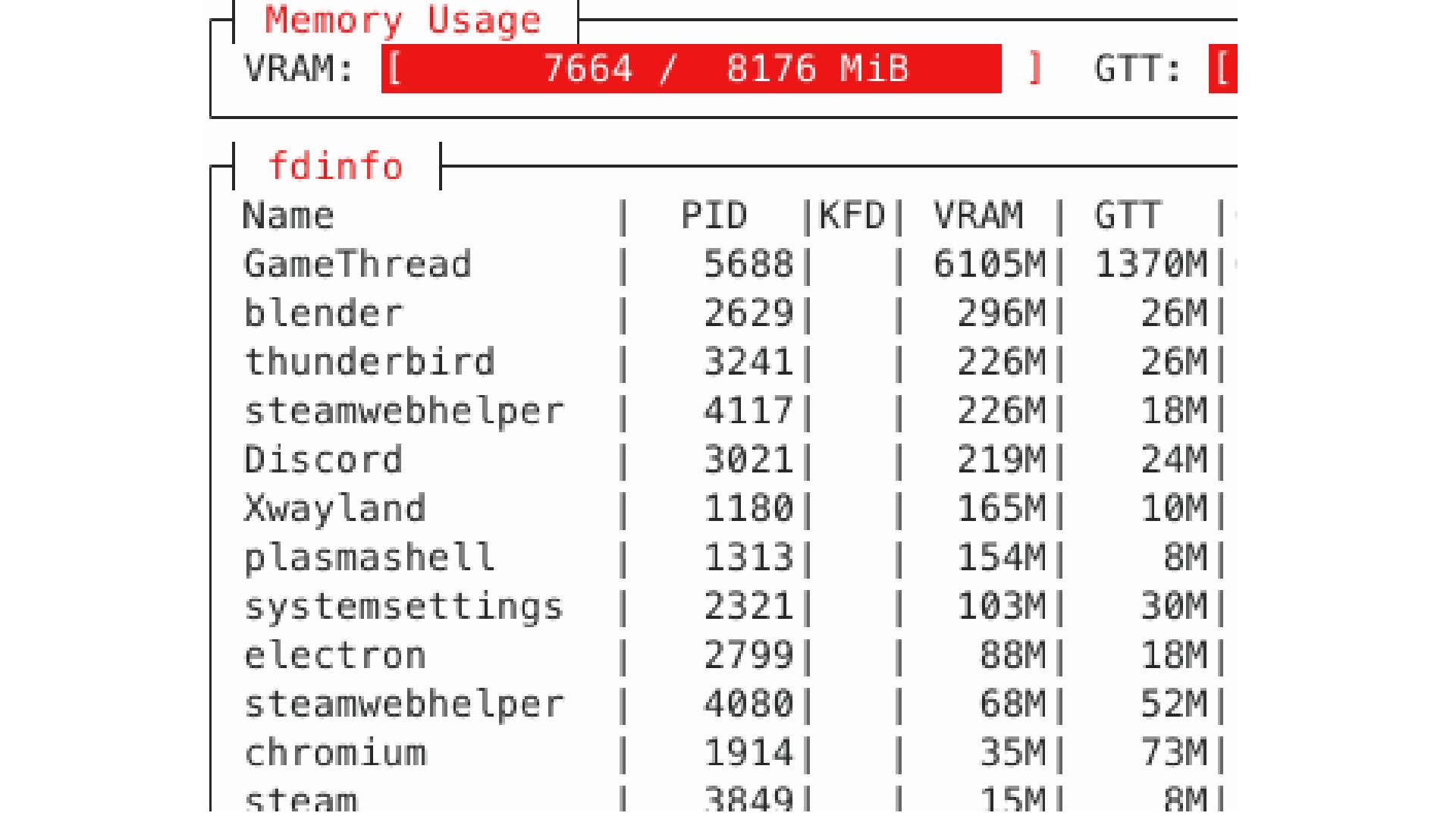
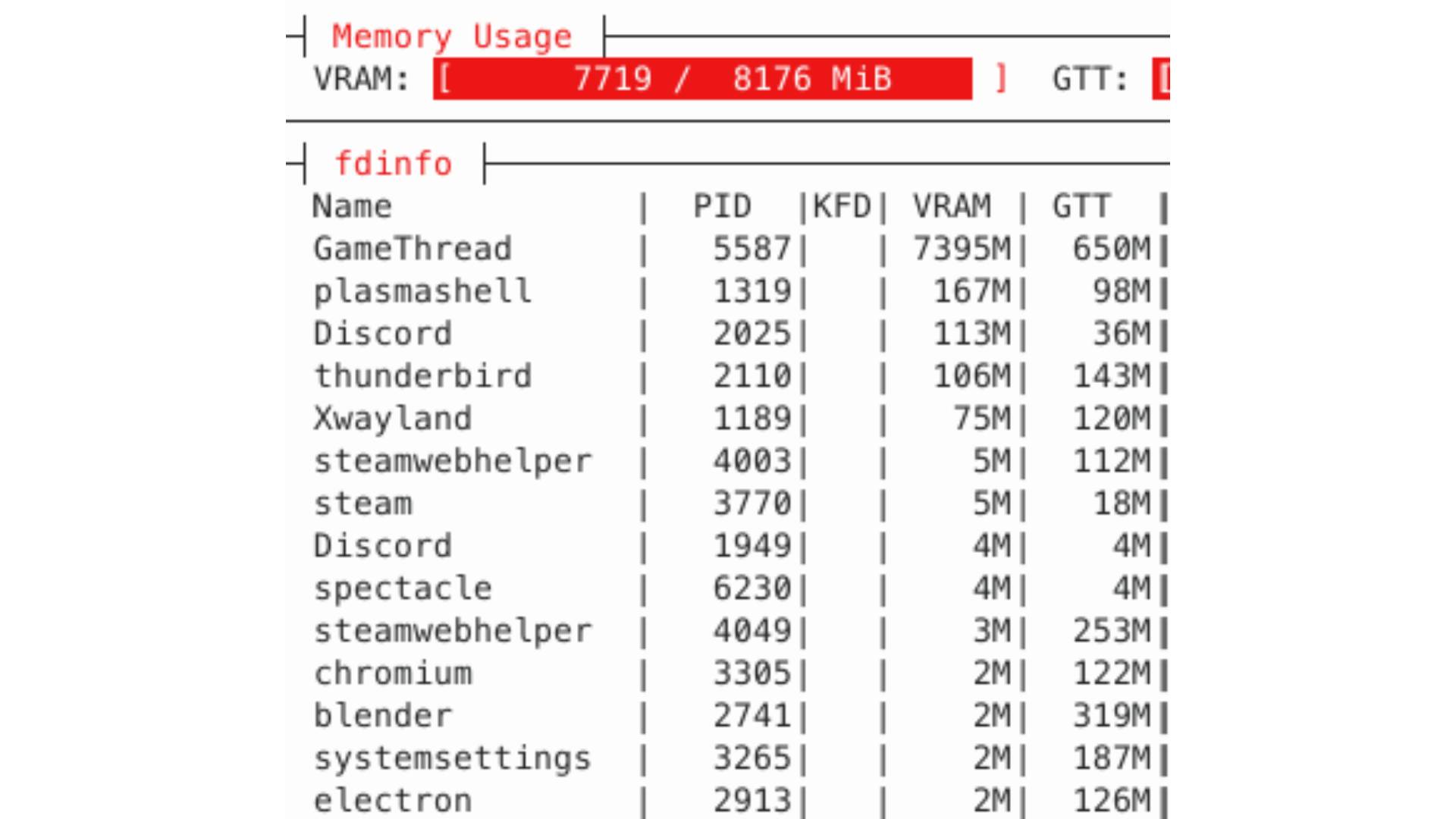
Simply put, the kernel updates mean that game-related processes take priority when it comes to VRAM, just as they probably should when running anything on a gaming PC. You might not notice that when using something like AMD's Radeon RX 9070, but it's absolutely an issue that can crop up when using something like the upcoming Steam machine or even a new, lower spec card if running releases with high-res textures.
Originally, I figured the proposal could also benefit some of the best gaming handhelds out there, like Valve's own Steam Deck OLED, but Vock admits she doesn't know if the patches will benefit iGPUs or APUs. Since the Steam Machine is set to pack a semi-custom RDNA 3 dedicated GPU, though, the idea could really help when running games at 4K without dialling back settings or going all in on AI upscaling.

Right now, the patches are being implemented in the performance-optimized Arch Linux distribution, CatchyOS, but should be merged into the main kernel. The question now is whether SteamOS will also gain the perks through its optimised kernel, but I can't help but think that anything that'll optimize and boost Steam Machine performance is a no-brainer.
Ultimately, if the Steam Machine does gain Vock's memory optimization patches, it might provide far better Linux performance than originally anticipated. Whether it'll actually be a 4K 60fps capable box remains to be seen, but if you also throw the expected AMF FSR tricks into the mix, it makes Valve's performance pitch sound more believable.
Already got Valve's handheld? Swing by the best Steam Deck accessories and best Steam Deck dock to create the perfect portable setup.

You must confirm your public display name before commenting
Please logout and then login again, you will then be prompted to enter your display name.