


I recently had the chance to visit Secretlab's HQ ahead of the launch of its latest chair, the Atlas. I, like many, have been known to criticize the firmness of this brand's cushioning in the past. The Secretlab Titan Evo is a popular product, but it's never been my pick for the best gaming chair because while it has unreal build quality, it can feel a little too solid to sit in for my liking. So when I first got to sit down in the Atlas, I could feel Secretlab employees perched, eager to know if I thought that was an issue with their new passion project.
I'm sure that'll be the question on a lot of shoppers' minds at the moment. Secretlab's chairs are pricey, and the Atlas offers a reprieve from that with a lighter price tag that starts from $499 in the US and £399 in the UK. If the Titan Evo's price puts it out of reach for folks who otherwise would love a chair from this brand, the Atlas might finally be the one for them. But the question remains: is it as firm as people have said the Titan Evo is?
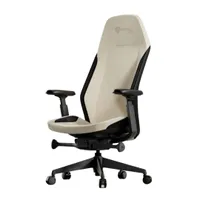
I've been sitting in the Secretlab Atlas for around four days now, on top of my experience trying it out in Singapore at the company's reveal event. And while it isn't designed for gaming, and certainly isn't targeting gamers in its marketing, its pedigree comes from a brand that undeniably has gaming at its heart. Secretlab's two co-founders met and became friends through video games; a massive proportion of its 4,000,000 customer base will all be from a gaming background, courtesy of Esports and officially licensed video game liveries for its products.
The Atlas might not want to be good for gaming, but it might just end up as my preferred Secretlab chair for gamers once my testing is said and done.
In other words, it may well be better than the Titan Evo.
Firmness - Is less more?

Okay, enough stalling. Is the Secretlab Atlas too firm?
I'd love to give you a straight-up answer, but I'm not sure it's as simple as that. The Secretlab Atlas uses the brand's same homegrown upholstery and cushioning as the Titan Evo, but it's a much lighter-feeling product that takes a really different approach to supporting your posture. It's also not trying to be a gaming chair; it's a productivity seat that puts ergonomics in more of a spotlight than add-ons and colorways.
So there's definitely a firmness to the Atlas, but because it's taking a different approach, that isn't such a bad thing. To answer this properly, I need to talk about mesh chairs and the Fractal Refine.
For years now, gaming chair brands have been trying to sneak their way into more offices and homes by going after a different niche in the gaming chair market: ergonomics. So much of the time, these end up being mesh chairs with very little cushioning, loads of clicky adjustable panels, and a massive price tag. With pretty much all of them, you feel like you're paying more for less of a product, because while mesh is "breathable", it's really just a net that'll support your bodyweight.


Regardless, these chairs get by despite a lack of cushioning. I'm not the biggest fan of mesh chairs, but it's plenty comfortable in a seat base or backrest, and it does inspire you to sit up straighter and make your posture self-supporting because there's not as much there to relax into.
In my opinion, the best chair to take the design philosophy of those lighterweight, more slender ergonomic chairs and turn it toward gaming is the Fractal Refine. It can be had with mesh upholstery, or with a fabric one, and in either case you get a much lighter degree of cushioning, but because its design is inspiring you to sit up straighter and mind your posture instead of sinking into it for hours on end, it works, and works really well. It takes less cushioning with this kind of design to keep you comfortable.
The Secretlab Atlas reminds me of the Fractal Refine in so many ways, because it takes a very similar approach. Its backrest is taller, slimmer, and arguably more minimalist. It even has a similar feature set to the Secretlab Atlas, including seat depth adjustment and, more relevantly, a narrower amount of cushioning.

I haven't gotten the measuring tape out or cut into the Atlas to know this for sure, but compared to the thicker backrest of the Titan Evo, it feels as though Secretlab has opted for a slightly thinner layer of cushioning on the Atlas. With a taller shape, an integrated lumbar curve, and a lower seatbase to inspire more ergonomic posture in your lower body, the cushioning in the Atlas doesn't feel as firm as previous Secretlab chairs. I still need to shift around at points, but the seat base and backrest both feel a lot more comfortable than the Titan Evo.
Less might just be more.
For reference, I'm testing the Atlas in its Dune+ colorway, which means I do have the Nanogen cushioning and upholstery - ie, the comfier version. That said, I tested the Secretlab Titan Evo NanoGen Edition, and it didn't feel this welcoming to sink into.
I don't know for sure if this is the case, but the Titan Evo is a heavy, sturdy bastard of a chair. It will last a lifetime because this brand's build quality is second-to-none, but at times I feel that bleeds into the sitting experience because while the cushioning could be less firm, the frame feels like it has zero give, and that might just add to the "too firm" allegations.
The build quality of the Atlas is still great, but its parts felt a lot lighter when I was assembling it, and I wonder whether this is playing a part.
The move from 4D to 3D

One of the strongest first impressions I have from my initial stint sitting in the Atlas is that its armrests are great. In many ways, they fix some of the biggest woes I've had with a lot of gaming chair armrests in recent times.
To adjust them, you don't need to push loads of buttons or release some catches. They have a lever on the outsides to move them up and down, but to rotate or move them back and forward, you just push them, and they click into position. But where other armrests click out of position far too easily, the ones on the Atlas actually take some oomph to adjust. They're yet to fall out of position from me applying pressure to them, and I hope that remains the case as my testing goes on.
I hate to say it, because the armrest surface and cushioning feel really comfortable and plush, but I do think Secretlab has fumbled slightly by dropping down from 4D armrests on the Titan Evo to 3D ones on the Atlas. If there was one adjustment I think these could really use, it's the ability to be narrower, and that's the dimension that's missing.

Yes, they can rotate to make the width problem less of a bugbear, but when sitting naturally at my desk, the points of my elbows are only just landing on the armrests; they're in no position to be fully supportive without me slumping into the chair.
When I was at the Secretlab HQ for the reveal of the Atlas, Ergonomics Specialist Dr Lindsey Migliore, a PMR Physician, Founder of GamerDoc, and a Secretlab Ergonomics Advisory Board Member, talked about the 90, 90, 90 rule - the importance of having 90-degree angles for your knees, hips, and elbows while sitting at a desk. With wider-set armrests, the Atlas risks the same issue as the Corsair TC500 Luxe in that, to properly use the armrests and achieve that 90-degree angle in my elbows, I need to pull them out from the sides of my body, creating a slouching position in my chest and hampering the ergonomics of the chair.
I need to keep testing to see if this is the case in a longer-term sense, or whether I'm still adjusting to a new chair, but it could be a bigger issue with the design of the Atlas. If the armrests were capable of going a fraction narrower and a fraction higher, they'd be perfect.
My road leads into the desert

It was one of the first things I thought about the Atlas when Secretlab pulled back the curtain on it; the Dune colorway is one of the best-looking designs this brand has ever produced. Yes, it sucks that the Atlas doesn't have compatibility with the massive library of Secretlab designs and officially licensed colorways available for the Titan Evo, but if you're able to grab one of the Dune designs of this chair, I think it just about makes up for it.
Not only is it a beautiful texture that's in its element in a home office, but it has a neutralizing effect on the theme of a room that manages to bring all of the interior design together. In other words, its caramel/beige/sandy hue has a way of blending into black, white, or wood-colored setups like mine. It somehow blends between all of these tones, and it just looks priceless.

The other Secretlab colorways look good too; the Atlas is a bold new aesthetic for the brand, so it's an immediately eye-catching chair in any color. But the Dune version has a way of complementing the design so that any harsher angles and clearer outline lines are almost absorbed, creating a much softer and more calming effect on your eye.
As someone who has placed many a gaming chair in their home workspace over the years, this is probably one of the best-looking I've had the privilege of welcoming in.
The price seems right

I still have a lot of testing to do before I'm ready to give the Secretlab Atlas a final review score, but I'm actually really excited to do that testing.
I like to sit in a gaming chair for around a month before reviewing one because I like to give it time for it to cause aches and pains, or relief. I like to see how the build quality stands up to a longer period of testing than other reviewers typically give, but that sometimes means by the end of week one or two, I'm dreading the remainder of the time with a seat because I can already recognise its flaws.
The Atlas is great to sit in so far, and for once with a Secretlab product, I feel excited that I don't have the cloud of a higher price tag making it even harder to recommend. This is a more affordable Secretlab chair than I've tested previously, and so far, I actually like it better than the more expensive ones.
Will that be the case in a few weeks time? Who knows, but right now it's one I'd tell you to keep on your shortlist while you search around for a new place to sit.
See also the best gaming desk, the best console gaming chair, and the best gaming PC.

