There's a tension inside of Bethesda Game Studios. A desire to work as the studio always has: in relative seclusion until it's ready to make a big statement. "We want that moment where people find out about our stuff to be really, really special," says Todd Howard, the executive producer speaking as I tour the new Bethesda headquarters. He asks that players "don't ever take our silence" as a sign that the studio has nothing to say: "I definitely lean towards not talking about stuff before it's out."
I'm here in Rockville, Maryland because Bethesda is offering fresh insight into the Future of Starfield. There's the incoming release on PS5, as well as a new Free Lanes update and Terran Armada expansion that massively expands the underlying meta loop of Bethesda's cosmic adventure. Howard believes in this work, and is keen for players to give Starfield another chance come April 7. But it's here where we meet some of that tension, because Howard seems eager to begin teasing what's beyond this horizon.
The majority of this building is working on The Elder Scrolls 6
The Elder Scrolls 5: Skyrim is set to celebrate its 15th anniversary in November. A new adventure in Bethesda's beloved fantasy universe has been a long time coming, for both players and creators alike. "Being in that world again, after not developing in the Elder Scrolls… it's so different than Starfield, and so different than Fallout. It feels great for us," Howard continues. "We feel like we're in a really good place with these franchises."
"If we look at our audiences, there's a lot of crossover. But, given their popularity, there's definitely people who strongly prefer one over the other – which is totally understandable. Despite some game flows that might feel the same in your hands, they're different vibes – and they're different vibes to develop," he says. "There's something very romantic about the Elder Scrolls in the fantasy world that gives you this comfort, and this verisimilitude, of a world that you feel you can almost step out into."
The Creation Engine

The Elder Scrolls 6 entered full production in 2023, following the launch of Starfield on PC and Xbox Series X. When asked whether there were any key lessons learned through the development of Starfield that are now being applied forward, Howard pauses. "I have answers," he says eventually, "I'm just trying to think of the non-spoiler ones."
Howard ultimately decides to tease out the work Bethesda is doing with its underlying engine – with the studio developing a new iteration of its proprietary Creation Engine for The Elder Scrolls 6. "I will say, the way we approached the engine work: we've done a much better job of it this time. With Starfield, it was made on Creation Engine 2, which was a big change from the original engine."
"We have Creation Engine 3 for The Elder Scrolls 6 – it started on [Creation Engine] 2. When you do an engine change, or you are updating your core tech, that is an upheaval for the team trying to make stuff," he says. Howard explains that this process, of transitioning between engines, can be exceptionally disruptive if it isn't handled appropriately.
"With Starfield, we pulled the rug out. We were doing things in tandem with old and new, and – without going into it – I think the team and our tech staff, everybody, came off of Starfield and…"
When you do an engine change, or you are updating your core tech, that is an upheaval for the team trying to make stuff
He pauses again, refocusing his thoughts. "And this wasn't me saying it. Everyone on the team was like, 'we have to handle this engine updating and change much better so that we can be productive.' I'm giving the team an A+ there. We have handled that better than we ever have. So we're very happy with where the tech is, and where it's going. Being able to develop while you're changing your tech is a big trick any developer goes through that has been iterating and doing this [type of work]."
Howard tells me that, in spite of the complexities of updating the Creation Engine for a new generation of Bethesda RPG, he never considered shifting over to something like Epic Games' Unreal Engine 5 (which was recently used to power Oblivion Remastered). "Unreal is an amazing engine, but we like being in control of our own destiny."
The evolution of Bethesda
The Elder Scrolls 6 is undoubtedly the most anticipated upcoming video game outside of Grand Theft Auto 6. And given the divisive response to Starfield, you wouldn't be wrong for thinking that Bethesda could take this as an opportunity to reevaluate how it works – scaling up its headcount to ensure it has the staff on hand to meet the moment. Howard says that this isn't the case. In fact, he notes that production for ESO6 isn't all that dissimilar to previous Bethesda titles.
"If you look at our games," he continues, "there hasn't been these big jumps. The team sizes go from 40 to 60 to 80 to 100 to, depending on how you want to add it up, we sort of top out with partners to four or 500 people. That's kind of like our peak."
Howard says that working this way is core to ensuring that Bethesda is able to establish and evolve the design principles that have been in place for over 25 years. "We still want to be who we are. And when we're making a game, we have longer pre-productions with smaller teams until we're like, okay, we know what this is," he says. "So when we're making a new one, we really want to get a good kernel of a game that we're ready to then put more people on and start moving faster."
I get the impression that Bethesda is moving into the start moving faster phase of development of The Elder Scrolls 6. Given that it took the studio five years to guide Starfield from reveal to release, some of you may certainly wonder why Bethesda takes so much time to push new games out into the world. On this, Howard has two things to say. For starters: "Everyone at the studio has a responsibility to make sure our games are as good as they can be."

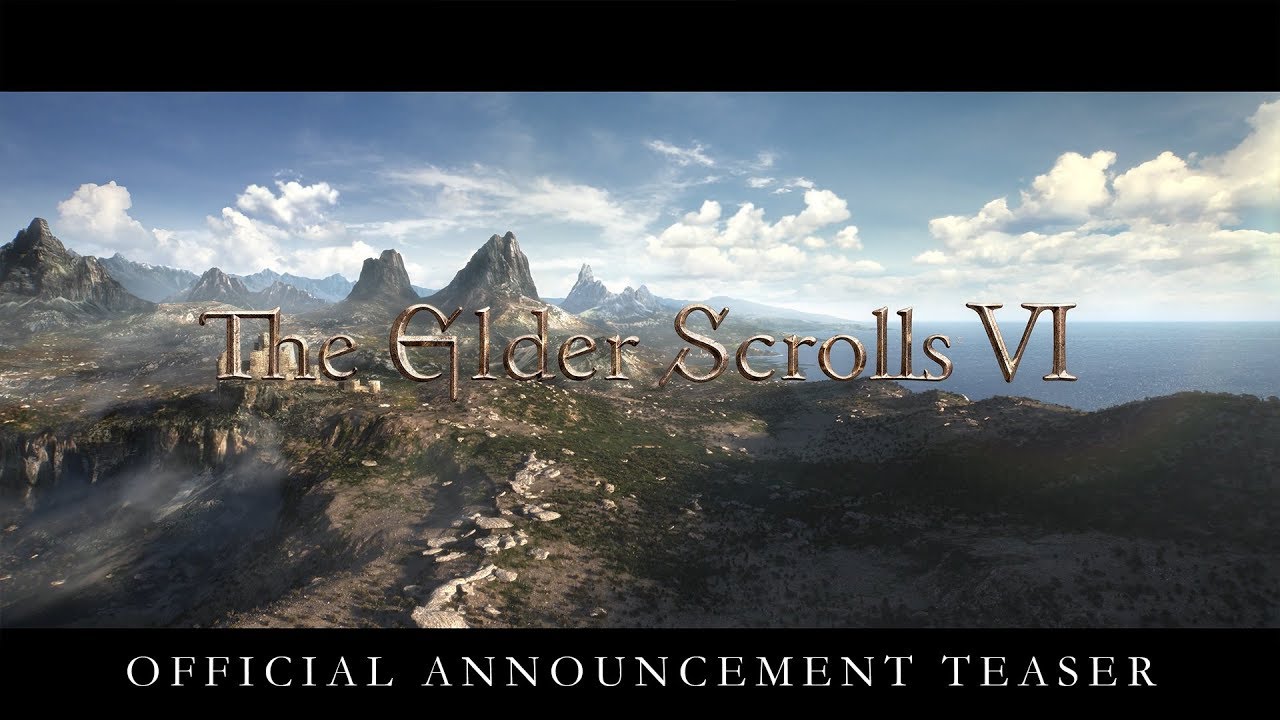
And in addition to that, Howard is clearly keen for The Elder Scrolls 6 to not get swept up in the narrative that Bethesda takes an age to get new games in front of players. "I don't want to count The Elder Scrolls 6," he says, laughing. While Howard didn't speak to this directly, I get the impression that Bethesda considers The Elder Scrolls 6 to be announced, rather than revealed – the short teaser trailer from 2018 a proof-of-life rather than a kickstart of the countdown to release.
Howard is quick to acknowledge that "Starfield was unique in its length of time" between announcement and reveal, citing challenges inherent to building a new IP against the backdrop of a pandemic and the studio's acquisition into the Xbox organization. "Starfield was long, but other than that, [our timelines] are usually pretty short."
The leaks don't help us. They never help us. They don't help the audience either.
"Skyrim was about a year. Fallout 4 was pretty close to that. Oblivion [Remastered] was immediate," he says, acknowledging that the decision to shadow drop the latter was made partially in an effort to let the game speak for itself rather than let expectations be set by the rumor mill. "The leaks don't help us. They never help us. They don't help the audience either."
What does all of this say about The Elder Scrolls 6, if anything? Reading between the lines, you should consider the protracted cycle that impacted Starfield to be something of an aberration – an anomaly in the way that Bethesda likes to operate. Instead, it may be better to expect the wait for ESO6 to be a little longer than you may like, albeit with the knowledge that when the studio is ready to pull back the curtain, the wait to get it in your hands won't be especially long beyond.
Worth the wait

Before I let you go, I want to share one final Todd Howard anecdote. We were discussing the wave of incoming anniversaries that Bethesda Game Studios is about to celebrate, and how Howard thinks about the studio's design philosophy within that context. I believe that what he says here may give you some insight into some of the pressure he and the hundreds of other creatives working at BGS quietly feel as development (and player expectation) ramps up on The Elder Scrolls 6.
"We're very fortunate that what we do and the gaming audiences have gotten bigger and bigger," says Howard, speaking to how the industry has changed over Bethesda's 40 years, "but it hasn't necessarily changed who we are. If you were looking at other studios, supporting all of these games, they'd be four or five times the size of us. So we're very particular about how to maintain who we are – to make sure the games are really, really special."
"There's also somewhat of a natural kind of pressure. Skyrim's 15th anniversary. Oblivion's 20th. It makes you think, 'that's a long time!' And you know, on one hand, it's a blessing – you're like, 'wow, these things are still talked about.' On the other hand, you're like, 'you know what, we've got a lot of work ahead of us.' We're doing a lot of work. We have got to make sure that this stuff delivers for the fans who have been on that journey with us, right?"

You must confirm your public display name before commenting
Please logout and then login again, you will then be prompted to enter your display name.