Join The Community





My hands are shaking, eyes wide as I try to pirouette through a barrage of swirling multi-colored bullets from a hulking, rooty tree thing called Prophet. About 30 minutes into one of my early runs in Saros, the spiritual successor to Returnal – a roguelike shooter Housemarque calls "bullet ballet" – this boss is putting me through the wringer, whipping at my pointed toes as I desperately try to survive through a surprise second phase with dwindling health. This ain't no Swan Lake. I dodge, I weave, I ease the DualSense triggers to use alt-fire blasts when I have space. Finally, it falls. Then… it gets back up. Come on, a third phase?
As someone who felt like they mastered Returnal's third-person shooting well enough to consistently bash through runs, in this moment Saros begins to feel like a gargantuan challenge. Sweating it up in Housemarque's Helsinki office, a fizzy orange drink the only way to calm my nerves, I'm getting nervous. Let loose on the first three hours of the game from the very start, I'm told I have two whole levels to play through. What if this is where it ends for me? What if I can't get past the first level? Saros is a wonderful spiritual sequel to Returnal, but it's a different, evolved beast at the same time – with well-judged difficulty providing an excellent challenge that's satisfying to overcome. Forget being a PS5 must-play, Saros is feeling like game of the year material already.

Image credit: Sony

Image credit: SIE
Bullet sponge
Developer: Housemarque
Publisher: Sony
Platform(s): PS5
Release date: April 30, 2026
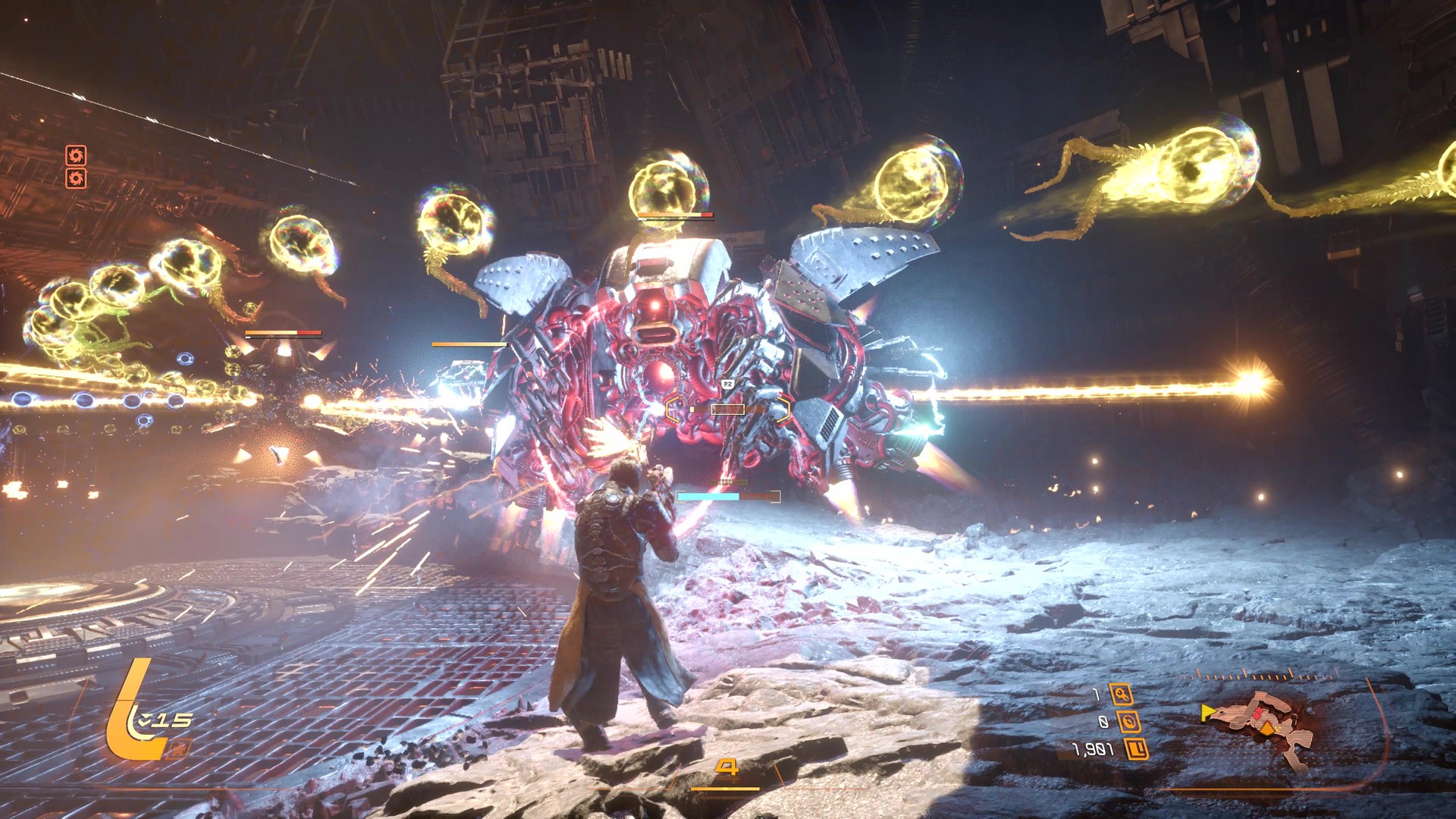
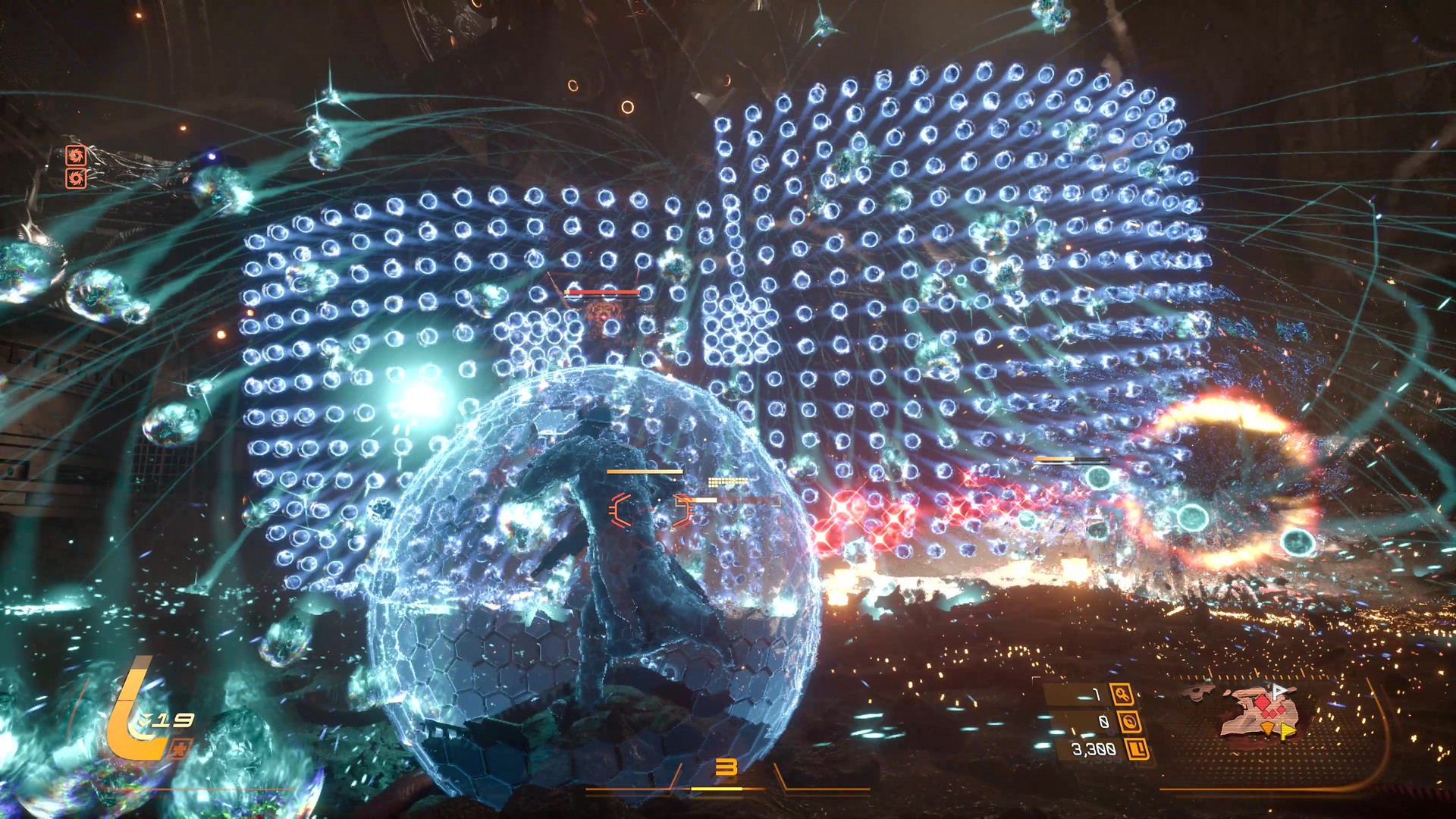
Funnelling me into a small corridor, walls of roots restricting movement, it feels like Prophet is issuing me a direct challenge: stop trying to play Saros like Returnal. So I do. With dodging in such a small space feeling like a death sentence, I instead have the tenacious Soltari enforcer Arjun Devraj (Rahul Kohli) square up to the lightshow-like display of bullets, readying his shield to meet the threats of alien planet Carcosa head-on.
Using this piece of megacorp tech from back home depletes the energy levels of Arjun's armor. But, absorbing compatible bullets restores even more of that energy, able to be overcharged and blasted out to deal devastating damage. Blue bullets do this unhindered, but yellow bullets – corrupted by the Carcosa's frequent, strange Eclipses – spread that corruption through Arjun's suit, reducing his armor capacity until I cleanse it with each power blast.
During the climax of my duel against Prophet, my health already dwindling, playing it safe – as I might have done in Returnal – isn't going to cut it. Fully embracing the utility of Arjun's shield, I accept that from this point on, health doesn't really matter. Constantly swarming me with corrupted, yellow bullets as well as the safer blue ones, I push through them all with no distinction.

Image credit: Sony

Image credit: Sony
Hold, release, blast. Hold, release, blast. Mistiming getting that shield up will see Arjun obliterated: too late, and the final 10% dregs of his armor will be shredded, but too early and I won't have enough shield energy recharged to even begin sucking them in. By the end I'm not dodging at all, deliberately making myself a target to ensure as many bullets pepper into me as possible. With this long, narrow arena, it becomes a tennis match, a volley of bullets that I keep throwing back into Prophet's face – a proper duel.
When Prophet crumbles, I'm exhausted. Even though it's one of the best PS5 games, Returnal's runs could take well over an hour, seeing how far into each sequence of levels you could get, unsure how far you'd make it. In Saros, I'm relieved to see that after this first boss I activate a teleportation shortcut back to Arjun's base of operations – The Passage – which I can use to return to tackle the next level immediately, or start from square one to hoover up upgrades through levels and bosses back-to-back if I so wish.
Housemarque tells me that aiming for these chunks of play to average about 30-minutes in length is deliberate, and it feels like a smart move, giving me much needed time to breathe and let that stress out. Clashes in Saros, rewarding you for risky manoeuvring close to enemy fire, can feel so much more intense than Returnal where staying on the move was often the catch-all strategy.

Safe Passage

Dive into the eclipse with our Saros Big Preview, where we will be revealing more exclusive dev access and extensive hands-on impressions for this PS5 must-play over the coming days!
Soltari, the megacorp that sent Arjun and his crew off to shipwreck on Carcosa, are eager to get their hands on the planet's enigmatic, eclipse-fueled natural resources – though the preceding expeditions have seen each colonization attempt go mysteriously missing. Arjun's unit is specifically geared up to find out why – and for some that mission is much more personal than the clinical profit margins Solatari are chasing. That tension is already a highlight, and best observed through Primary, an almost snake-like, mechanized artificial intelligence unit that can improve Arjun's gear. Teleport back to base camp for the first time and it'll briefly be confused before scanning you, declaring the technology now property of Soltari, and notifying Arjun he'll have a bonus in his payslip while our main man just rolls his eyes. It's charmingly HAL-ish.
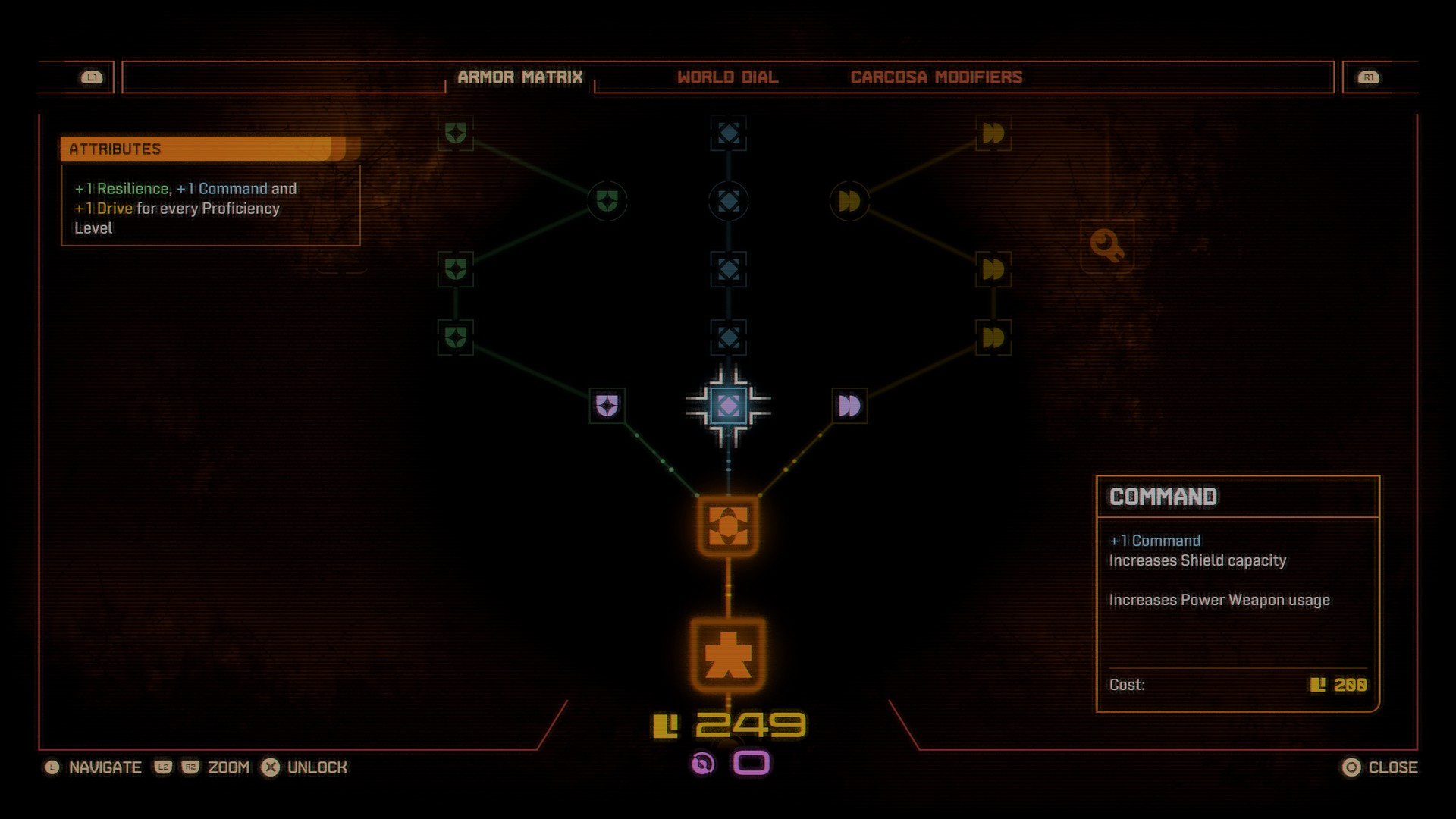
Primary's upgrades aren't all talk, either. Besides Arjun's shield, permanent upgrades through the Armor Matrix are the biggest way Saros diverges from Returnal. Scooping up resources from destroyed enemies or caches, they can be traded in to progress up a big skill tree, primarily giving Arjun stronger starting stats or for gear rolls to have a higher base level. In my demo, some nodes on this tree are locked behind defeating certain bosses, so there's a cap on how many upgrades Arjun can accrue that's tied to progression, but there's plenty up for grabs if you want to focus on getting stronger to get a leg-up in those boss fights.

Similarly, Carcosan Modifiers allow for further, world-altering tweaks, and are also set at Primary before an excursion. Split between positive and negative modifiers that you aim to balance, you may trigger, for instance, a wider collection radius on resource drops, but then need to counteract by setting enemies to do more damage. Not simply a difficulty mode, it allows you to explore adding your own layer of risk-reward.
Saros' roguelike structure means there will be plenty of time to experiment.
Saros' roguelike structure means there will be plenty of time to experiment as you fight through each of Carcosa's environments, even if teleportation means you can now start directly at each newly unlocked area if you wish. Between deaths, the planet reforms and shapeshifts so that Arjun will have to battle through a freshly formed sequence of rooms. It's a similar approach to Returnal, but, like with the more focused runtimes, feels tightened up.
Each handcrafted chunk of level feels well-designed, especially when it comes to presenting interesting spaces for intense shootouts with foes, mixing together different elevations with spaces for Arjun to run rings around enemies or deftly dodge their huge bullet barrages in close confines. Compared to Returnal, I find myself getting stuck on bits of level geometry far less across the first two levels.

Image credit: Sony

Image credit: Sony
Beyond each of Saros' rooms feeling well-designed, so too does the experience of moving between them. Some areas have multiple exits to progress forward, and whether one leads towards the main objective or is a side-route is marked clearly on Arjun's mini-map. These side spaces are always worth exploring if you're able to – some are locked and require collectible keys, or sometimes whole new traversal upgrades you presumably get later.
Unlike Returnal, these side-paths are all slight, quick diversions, but I think this really helps with Saros' fast-paced expeditions. It's so much easier to quickly assess the risk-reward value of going off the beaten track in Saros, while in Returnal I often found the lengthy side-paths not worth the backtracking time by the late-game. While Arjun's base levels are upgraded between each run, he'll still be stripped of power-ups each run, so hoovering up number-juicing upgrades as you plunge once more into Carcosa's depths is vital.
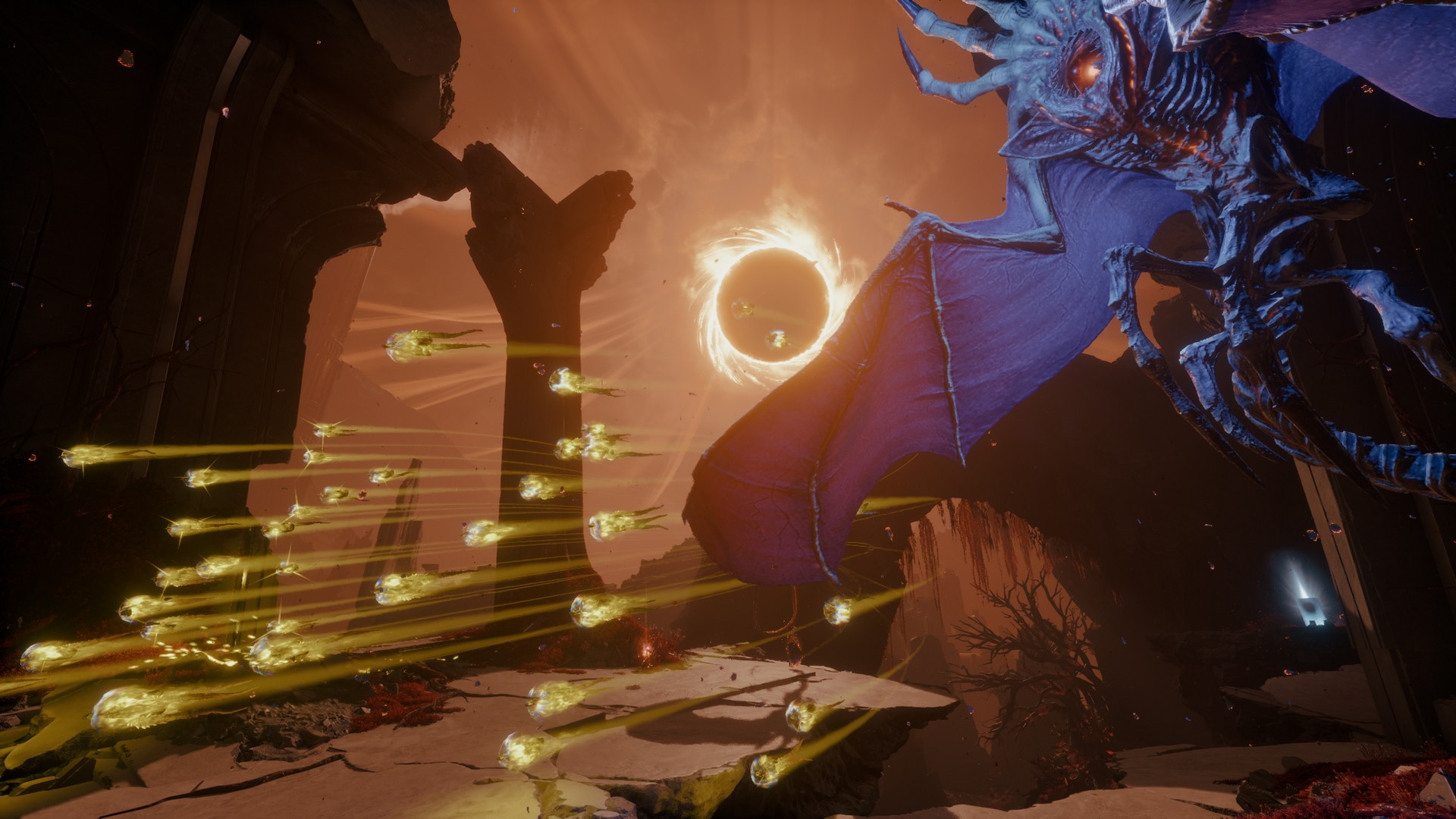
Saros' eclipses even make for a cleaner indication of that risk-reward ramp up, too. Housemaque calls Carcosa's lunar phenomena an "escalation" in just about every sense. Arjun begins exploring each environment as normal, but always comes up against a progression blocker that he'll need to remove by interfacing with strange alien technology that initiates an Eclipse. Under this phenomenon, new life is breathed into this otherwise almost dead-world – ancient forests stir once again, abandoned factories whirr back to life, allowing for new ways to progress with new dangers to match, from tougher beasties to having to move between laser-cutting tools.

Pressure is added just about everywhere during an Eclipse. Beyond just adding corruption to enemy blasts, it seeps into all things – gear too – teasing power at a cost. A huge power surge may now saddle Arjun with a decrease in power if he shoots while stationary (why are you stopping, anyway?), or, much worse, introduce fall damage. I will never look before I leap. Likewise, a hefty new gun may come at the cost of stripping away auto-aim capabilities. Saros is constantly making me think which debuffs I'm willing to handle in order to become vastly more powerful, and weighing up the cost of playing it safe versus feeling underpowered.
I've yet to get a full sense of Saros' broader structure, but getting to run a few loops across two levels (including beating them front-to-back one after another) is enough to convince me this quicker, more intense play is absolutely the evolution of the Returnal formula I wanted to see. Just three hours has been enough time to get me comfortable with when to embrace the Eclipse, which side-paths to poke through, and which gear I want to pocket on each randomized run. But it's also made it clear there's so much more to experience as I find new layers of depth.
Arjun's starting pistol is a punchy, shotgun-like handgun I don't think much of at first, but when I grow comfortable with its half-trigger pull alt-fire – which removes its fire-rate limit completely to simply shoot as fast as you can mash the trigger – I begin to love it. Only at the end of my time with this early look at Saros do I even begin to really click with all the nuances of the Soltari shield. My first victory against Prophet was dicey, empowering, and edge-of-my-seat, but on repeat encounters with the boss I begin to grow more comfortable with scooping up corrupted shots only when I have to, easing my way through to the less dangerous blue ones.
Meeting that danger head-on, and growing comfortable with it, is all part of Arjun's journey. The second boss I face plays with this, blasting out waves of bullets that mix blue and yellow shots together, teasing me with potential non-corrupted paths to weave through for optimal damage. Then, there's a laser blasting out unblockable damage in its center, but surrounded by absorbable bullets. Play it safe, and just run? Or ride the very edge of the danger zone to blast all that energy right back out? It's possible to play cautiously in Saros, but the allure of embodying Arjun fully, and learning how to blast right through, is hard to resist.
Want more loops? Check out our best roguelike games ranking!

You must confirm your public display name before commenting
Please logout and then login again, you will then be prompted to enter your display name.