You are now subscribed
Your newsletter sign-up was successful
Want to add more newsletters?

Every Friday
GamesRadar+
Your weekly update on everything you could ever want to know about the games you already love, games we know you're going to love in the near future, and tales from the communities that surround them.

Every Thursday
GTA 6 O'clock
Our special GTA 6 newsletter, with breaking news, insider info, and rumor analysis from the award-winning GTA 6 O'clock experts.

Every Friday
Knowledge
From the creators of Edge: A weekly videogame industry newsletter with analysis from expert writers, guidance from professionals, and insight into what's on the horizon.

Every Thursday
The Setup
Hardware nerds unite, sign up to our free tech newsletter for a weekly digest of the hottest new tech, the latest gadgets on the test bench, and much more.

Every Wednesday
Switch 2 Spotlight
Sign up to our new Switch 2 newsletter, where we bring you the latest talking points on Nintendo's new console each week, bring you up to date on the news, and recommend what games to play.

Every Saturday
The Watchlist
Subscribe for a weekly digest of the movie and TV news that matters, direct to your inbox. From first-look trailers, interviews, reviews and explainers, we've got you covered.

Once a month
SFX
Get sneak previews, exclusive competitions and details of special events each month!
Ape Escape was a landmark title in the history of the PlayStation, being the first game that was only playable with a DualShock controller (which launched in 1997, around three years after the PlayStation's debut). Before Ape Escape's release in June 1999, several PlayStation games had added support for the DualShock's analogue controls in addition to the standard d-pad, but Ape Escape was the first title to be entirely built around the DualShock, packed with weapons, gadgets and vehicles that required full use of the two sticks, along with the newfangled L3 and R3 buttons.
Yet interestingly, right back at the start of development, there was no plan to use analog controls. Shuhei Yoshida, who worked as an executive producer on Ape Escape, recalls that the team, "Wanted to create a 3D, open-field, sandbox game like Mario 64, and they came up with the idea of capturing monkeys. So that came first. But during development, we learned from the hardware team that they were working on a new controller with two analog sticks." That discovery inspired them to create gameplay that was only possible with the DualShock.
Platform platforming

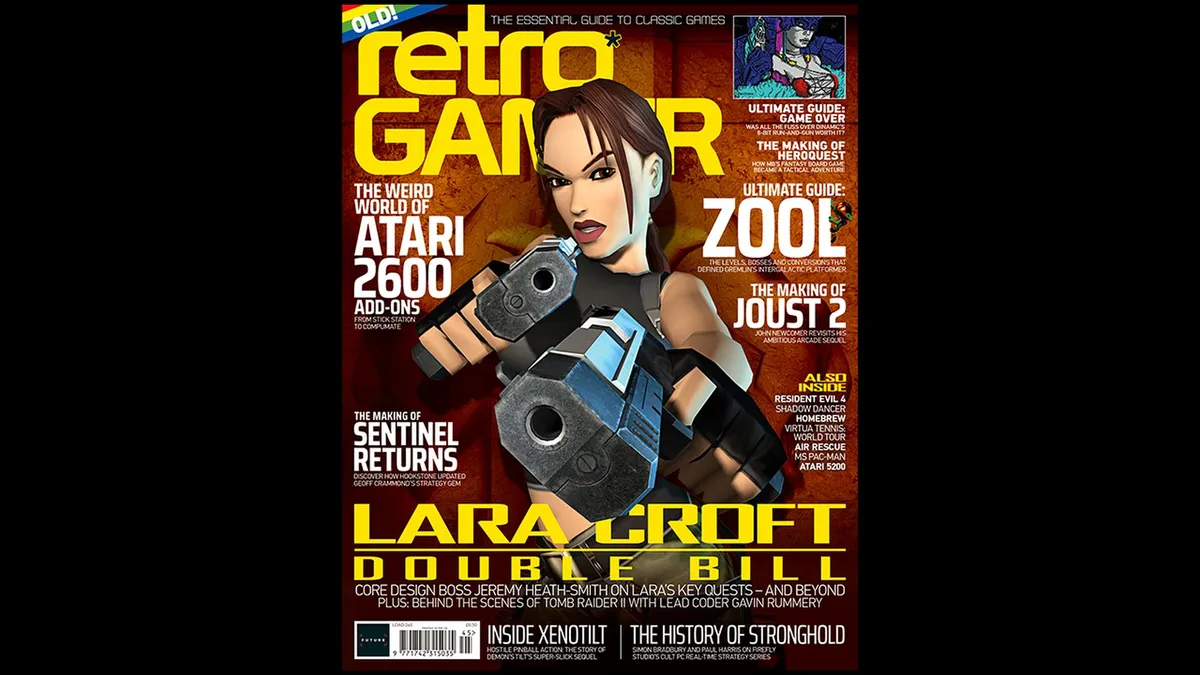
This feature originally appeared in Retro Gamer magazine #273. For more in-depth features and interviews on classic games delivered to your door or digital device, subscribe to Retro Gamer or buy an issue!
Yoshida had started working at Sony straight out of college in 1986, initially in the Corporate Strategy Group in Sony's headquarters. But as a huge videogame fan, he ended up joining Ken Kutaragi's PlayStation team in 1993. "They were already developing the actual PlayStation hardware, but they had a ritual that any new person joining the team was able to play the Nintendo version of PlayStation.
Kutaragi's team [had been] developing the all-in-one system with the Super NES and the CD-ROM as one unit, and there were a couple of games already near completion," explains Yoshida. One of the games was an unreleased shooter that was similar in concept to Game Arts' Silpheed, using 2D sprites over a 3D background that was streamed from the CD.
Yoshida was the lead account manager for Japanese publishers and developers making games for PlayStation, but in early 1996 he became a producer for Naughty Dog's Crash Bandicoot, since the production team at Sony Computer Entertainment Inc needed someone who could handle English communication.

"And because just handling one game wouldn't make me busy enough, I was given an assignment to grow the internal Japan Studio," Yoshida says. "At that time, there was only one full team, making Motor Toon Grand Prix games." That group would go on to create Gran Turismo and would later be spun out as Polyphony Digital.
A tiny team of three people was working on a prototype of what would become Ape Escape when Yoshida joined. The team's leader, Susumu Takatsuka, had moved across from Sega's AM2 division. "He was the animator of a fighting game called Fighting Vipers," Yoshida recalls. The other two were fresh out of college: Yuji Yamada would go on to become the game's lead programmer, while Takamitsu Iijima became a character designer.
Early stages

People out of college would join a company and stay with the company until retirement
Shuhei Yoshida
Yoshida and Takatsuka then hired Kenji Kaido from Taito, an experienced designer who had worked on games like Warrior Blade: Rastan Saga Episode III.
"I joined the Ape Escape team at an early stage of development," recalls Kaido. "At first, my role was to support Yoshida-san as an associate producer, but as the development progressed, I started giving ideas for the game and I took on a lead designer role as well."
The rest of the team, meanwhile, was made up of young, inexperienced graduates. "It's unbelievable now, but people out of college would join a company and stay with the company until retirement," says Yoshida. "That was kind of expected. So it was very hard to hire experienced people from the industry."

In addition to hiring graduates directly, Yoshida benefitted from Sony's Game Yaroze project, a competition where aspiring game designers could send in their ideas (Devil Dice is an example of a title that was brought to PlayStation through Game Yaroze).
"Sony Computer Entertainment was a joint venture of Sony Corporation and Sony Music Japan, and the game development team came from Sony Music Japan," explains Yoshida. "And in the music industry, they're always doing auditioning, right? So they had the same idea: let's do auditions for young game developer talent. And they were able to find and fund many good teams, but when they hired an individual applicant, they tended to hand them to me, because I was growing the internal team."
Dual shock

We are making a game only playable with the two analog sticks, the DualShock controller
Shuhei Yoshida
Back at this time, the three SCE groups in Europe, America and Japan operated pretty much autonomously.
"Each region had its own development [teams], and we didn't know what games were being made in the US and Europe," says Yoshida. "A few times a year we showed our games to other regions, and they got to pick which ones to publish, and vice versa. There was no cohesive portfolio strategy or anything, it was just three different publishers working together.
And when we showed the game Ape Escape, US marketing [said], 'So, you know, it's interesting, but can you play this game with the regular controller?' And I said, 'Oh no no, that's not the point. We are making a game only playable with the two analog sticks, the DualShock controller'. And they were like, 'Oh, that's gonna limit the audience, can you make it compatible with the regular controller?' And I was very naive, you know, from a business standpoint, a purist, [saying], 'No, no, no, that's not the point, we'll never make it compatible with regular controls!'"

It's interesting to hear that Yoshida's team met some resistance within Sony to making Ape Escape solely playable with the DualShock: from the outside, it seems to make perfect sense to create a title that showcases the DualShock's functions in order to sell more of the controllers. After all, plenty of console makers have commissioned titles in the past to showcase certain peripherals, like Atari did with the VCS' Keyboard Controllers way back in the Seventies. But some within Sony were against the idea.
"Actually, even the business company SCE had some concern about us making a game [that was] only playable with the DualShock and not playable with the regular controller," remembers Yoshida.
"I don't know who was concerned, like a legal group or a business group, or whoever, but they asked us to present the game to Ken Kutaragi himself. […] Ken's face lit up as we were showing the game, and clearly he liked what we were doing, because he was the inventor of the DualShock controller. Maybe he liked that the internal game team was making good use of the controller. So we were allowed to continue."
Monkey business

When we did playtesting, a young girl said, 'I really, really, really, really hate the poop.' So we decided to remove the poop.
Shuhei Yoshida
Kenji Kaido remembers that there was a lot of trial and error at the start of development. "But once we fixed on the core idea to 'catch monkeys', the overall game became clearer and clearer," he says.
"Instead of the game being changed, the game became more and more polished as we developed it further. There was one turning point that I remember, which was when we decided to target kids as the main audience. We simplified the controls after the decision."
Some early gameplay elements didn't survive, however. Yoshida remembers that originally the monkeys dropped poop. "And when you stepped on it, you'd slip, or something bad happened. And when we did playtesting, a young girl said, 'I really, really, really, really hate the poop.' So we decided to remove the poop." Instead, it was replaced with slippery banana skins that the monkeys drop behind them when you give chase.
Each monkey was given a flashing light on its head, like a police patrol car, to indicate its alertness status, from blue to yellow to red: a bit like how an exclamation mark appears over enemies' heads when they spot the player in Metal Gear Solid.
"We were all fans of Metal Gear games," smiles Yoshida. And to entice the player to capture all of the monkeys and create replay value, each one was given a name and personality, with each successful capture logged in a database.

The main baddie, the evil white monkey Specter, was designed by Takamitsu Iijima, says Yoshida. "The character was trying to be really scary, but is still childish and ends up being comical," he says. "[Takamitsu Iijima] was a huge anime fan, so I think there was lots of inspiration from Japanese anime characters."
The development of Ape Escape took around three years. "I remember everything was difficult for us," says Kaido, "but the most difficult aspect was the monkey AI. The programmer struggled a lot to develop the route search algorithm for the monkeys. The AI has to be smart to be fun, but if it is too smart, it does not feel like monkeys. It was a philosophical dilemma."
Kaido also recalls an experiment to use the DualShock's rumble capability in a novel way. "There was an idea to press a button on the player 2 controller to cause vibration for the player 1 controller to cause hindrance to the player," he says. "The idea was to make a rhythm action game mechanic like Parappa The Rapper, and if you input correctly on the player 2 controller, a vibration of different rhythm will be caused on the player 1 controller." But in the end, the idea didn't make the final cut.

"I remember coming up with the gameplay was really challenging," says Yoshida, particularly how best to use the right analog stick.
In modern games, this stick is typically used to control the camera, but in Ape Escape it was used for everything from directing your Monkey Radar gadget to spinning a hula hoop (the so-called Dash Hoop). "Coming up with those ideas was so hard, and we did so many," says Yoshida. "We prototyped and dropped so many game mechanic ideas when we didn't feel that that mechanic was using the analog stick in a really interesting way."
Progress on the project slowed to a crawl as the team came up with endless different gadgets necessitating novel uses for the right stick, only for Yoshida and the others in charge to reject them. It got to the point where one day, Yoshida came into his office to discover a note that was signed by the young people on the development team, who were begging to stop the prototyping and move on with development.
They had all written their names in a circle, with their names emanating from the middle like spokes, in order to disguise who was leading the initiative. As soon as he saw the note, Yoshida balled it up and threw it in the bin. "I announced that, 'No, we won't stop prototyping until we have enough good ideas,'" he recalls. "But eventually, I think it paid off."
Bot to the future

It's easy to draw a direct line between Ape Escape and the PlayStation 5 games Astro's Playroom and Astro Bot...
The middle period of the game's development was "stressful", according to Kaido, before becoming "exciting" towards the end.
But Yoshida has nothing but fond memories of working on Ape Escape. "When I get asked, out of all the games I was involved in, which game I had the most fun [on], I would say Ape Escape, because I was not only involved as a producer, but I was involved in every creative decision," he says.
"I was involved in every aspect of Ape Escape as one of the team members, so I enjoyed the process so much." Yoshida would later become less involved in the nitty gritty of day-to-day game development as he rose up Sony's ranks, eventually becoming president of SCE Worldwide Studios in 2008.
Ape Escape received a warm critical reception on its release in 1999, with IGN reviewer Doug Perry awarding it 9.5/10 and praising its "new and refreshing" analog controls. Kaido recalls that the success of the game didn't come as a surprise to the team, because it had already received a great response during pre-launch promotions.

And in terms of legacy, it's easy to draw a direct line between Ape Escape and the best PS5 games like Astro's Playroom and Astro Bot, where hunting for monkeys has been replaced by hunting for bots. "Intentionally or not intentionally, Ape Escape [showcased] the use of a new peripheral, new hardware for the platform, right?" says Yoshida.
"And Astro Bot was a really great showcase of the use of haptics or adaptive triggers on PlayStation 5. So, yeah, I can see that kind of transition or legacy. And actually, some of the members from the original Ape Escape [team] are still in Team Asobi."
Indeed, Toshitake Tsuchikura, for example, was a programmer on both Ape Escape and Astro Bot, and the latter features a section that faithfully recreates the monkey-catching gameplay of the 1999 game. "I was so happy to see that!" beams Yoshida.
You must confirm your public display name before commenting
Please logout and then login again, you will then be prompted to enter your display name.