Join The Community




Last week, Nintendo announced a new pricing strategy for Switch 2 games that will see first-party Switch 2 games launch with a $10 price split separating digital and physical versions. Nintendo is keen to frame this change as a price decrease for digital games rather than a price increase for physical ones, and a former sales lead from the company believes that's probably true. In fact, Nintendo may just be passing its own savings on digital sales back to you.
That former Nintendo sales lead appeared in the latest episode of Kit & Krysta podcast under just his first name, Sean. Sean says it won't be possible to determine for sure whether this pricing angle is true until we see the prices for more traditionally big-ticket games, like Fire Emblem: Fortune's Weave or Pokemon Winds and Waves, rather than the smaller-scale Yoshi and the Mysterious Book that's starting the experiment. But he has his suspicions.
Article continues below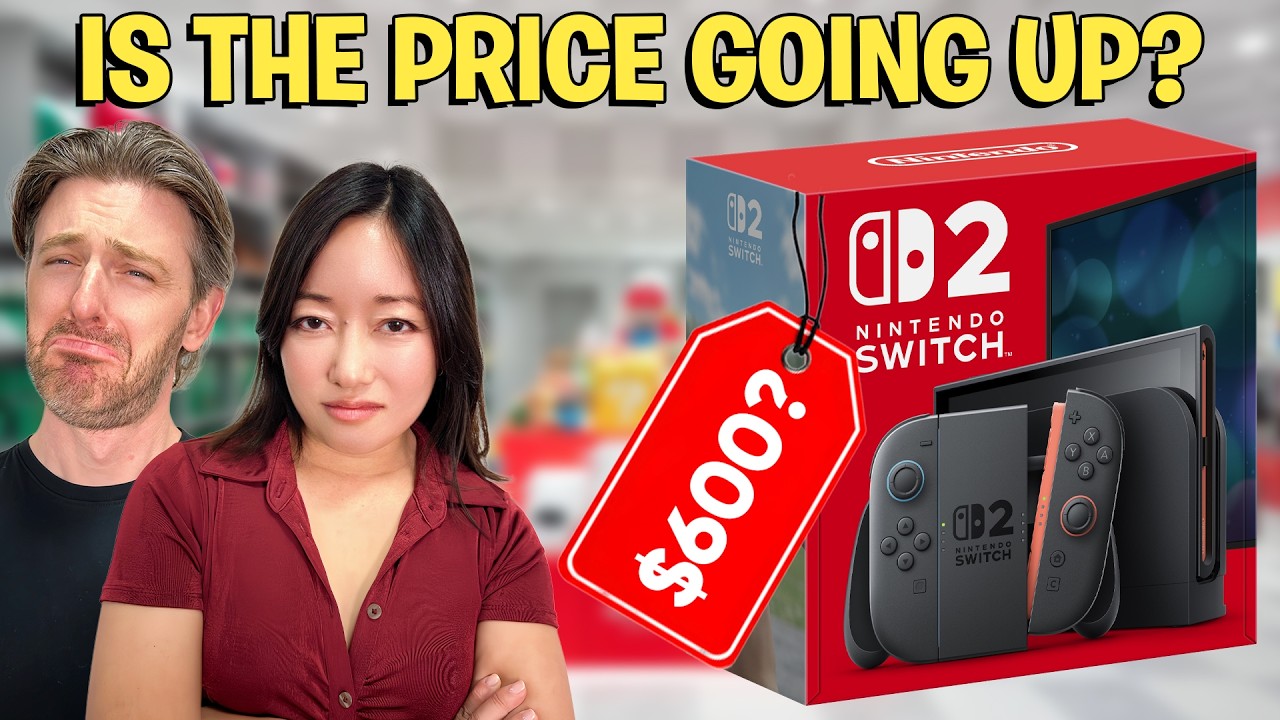
Sean suggests that dropping the price for digital games, which are less affected by those factors, will help make that console price hike more "palatable" to consumers. "I think initially they were maybe hoping tariffs go away," he says. "Maybe hoping that they don't have to start doing things differently, and continue just making Scrooge McDuck money." But the global economic factors – and let's be real, specific US foreign policies – driving the price issues won't be going away for a meaningful part of the Switch 2's lifetime.
Still, Sean doesn't believe that physical game prices will actually increase, at least in most cases. "I think physical games are going to stay at the price that they're at now," he says. "I'm being a little cagey in the way I answer that because there are some physical games that – like, Mario Kart was $80, right? But I think the majority of the physical games will be at the $70 price point."
But for those of us who still collect physical games – and I'm very much one of them – Sean quite rightly suggests that we're not going to be swayed to the all-digital life by a $10 surcharge, and that's probably part of what's helping retailers swallow the higher price for physical goods.
"The retailers know better than just about anybody that there are consumers that are still buying physical games," Sean says. "Maybe the person wants to have the collection on their shelf, or they believe in game preservation, or they're worried about losing access to a game. Whatever the reason may be, there are a healthy segment of consumers out there that want the game physical. Those consumers aren't going to be swayed, I bet, by price changes. Their motivation isn't because of price."
I absolutely would rather pay $10 extra for a proper physical cartridge rather than being saddled with an ephemeral digital license, so in that sense I'm glad I'm getting that option rather than seeing those retail games eliminated entirely. I just hope the option continues to stay on the table while companies like Nintendo continue to cut costs wherever they can.
You better believe I'll pony up for full cartridges of these upcoming Switch 2 games.

You must confirm your public display name before commenting
Please logout and then login again, you will then be prompted to enter your display name.