 Join The Community




Like the rest of the world, after Highguard was announced at The Game Awards last year I still barely knew what it was other than some sort of free-to-play, live service shooter, and I've not exactly been hurting for choice when it comes to those. Only after release, when Guides Editor Will Sawyer posted that it reminded him of Ratchet & Clank 3's underrated multiplayer mode did I finally lean forward, ready to hit the big 'download' button.
Like a lot of plays for the live service crown in recent years, Highguard is a blend of a frankly unreasonable number of genres. A little bit hero shooter, a little bit MOBA, an element of Counter-Strike with its match-winning bomb placing and defusing. Reinforcing and smashing walls even reminds me of Fortnite (though, thankfully, there's no free build). Even the sci-fi aesthetic is an odd mix, the sight of robed heroes on horses wielding assault rifles commonplace. It can make the initial hour spent in Highguard a bit overwhelming to be honest, despite a solid and brief tutorial.
When the go low, we go high (guard)

At the very least, the core goals of a Highguard match remain relatively simple: possess the Shieldbreaker, and raid the enemy base. Two teams of three begin on either end of a pretty large map in their base, and you need to battle towards and destroy the enemy base. To do this, each play has a Shieldbreaker spawn somewhere in the middle of the map, which needs to be escorted to the enemy base in order to blast a hole in their domed force field, within which bombs are placed across one of three points and potentially defused – League of Legends by way of Counter-Strike. Deplete the base's health enough and the match can end right there, or play is reset with loot and base damage carried over, and the rarity of goodies to find heightened.
Article continues belowBecause yes, there's loot, too. Spread around the map are huge crystals that can be mined for resources and traded in at a few trader spots. Additionally, Apex Legends-style chests can be found containing weapons across a spectrum of rarity colors – plus saddles, amulets, helmets, and, of course, armor (which you need a few stacks of, as they shatter on death as you wait for respawn).
Each Highguard match is broken down into fairly distinct, snappy phases
Which means each Highguard match is broken down into fairly distinct, fairly snappy phases. On paper, they all seem like they should work. You spend a bit of time focusing on getting better gear while staying ahead of the enemy squad. You fight over trying to score a Shieldbreaker touchdown on either side of the map. Then, you either attack or defend as a result of how the phases before went.

But Highguard is both too big and too small. The maps are so large that conflict is rare until you get that final phase. With so few enemy players, getting the Shieldbreaker to the enemy base can be extremely quick if the opposing team isn't super on it. On the flipside, when you do get a good push-and-pull going in this phase, battling it out as the Shieldbreaker is dropped and picked back up, Highguard will decide it's gone on for too long, and will skip straight to a siege, teleporting players across the map after a certain amount of lives are lost. It can feel jarring, and make the battle beforehand feel a bit arbitrary and pointless rather than clutch.
It's in the sieges themselves that Highguard feels best to me, cutting straight to the meat of what its firefights are about, forcing players into conflict in a much tighter space with clearer, closer objectives. With multiple generators to bomb (and a limited amount of lives used for attacking), there can be a real cat-and-mouse element. You'll maybe push towards one objective then switch to another to bamboozle defenders, chipping away at generator health over time as you and your team dynamically set up defensive points, decide to where to push, or fallback to regroup across each dense base (the design of which players decide at the start of a match).
Double your fun
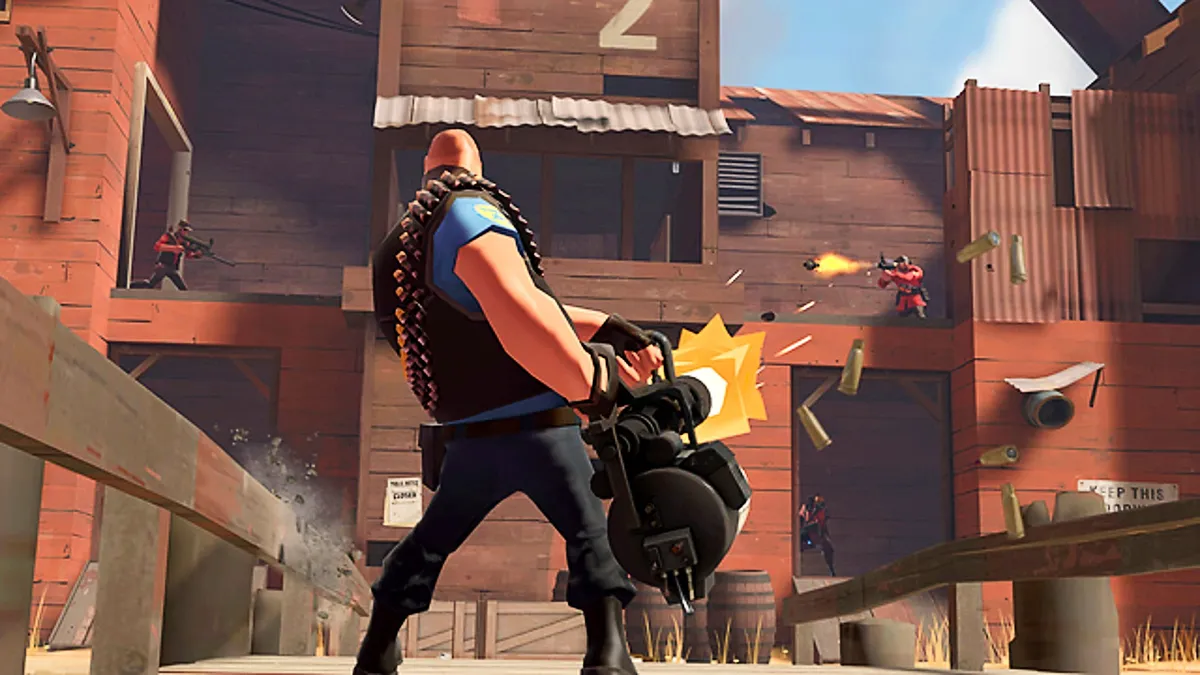
It's in these moments I'm reminded of some of my favorite maps in my favorite shooters – particularly the iconic 2Fort from Team Fortress 2. After all, in that map, it's all in the name: two forts directly facing one another with a small no man's land multiple routes through it to infiltrate the opposing space. But, unlike Highguard, what sets the legendary 2Fort apart is how small and immediate it is by design – it's the complete opposite.
While in its best moments, Highguard evokes the 2Fort energy, by trying to go too large it loses the essence of what made the push-and-pull on that map so great, diluting it into phased either/or exchanges that take too long to actually occur, with a build-up that feels too inconsequential. Sure, maybe I'm reaching a bit too hard for my 2Fort beloved, a ghost of my past, but it's the closest I've felt to reliving battles on that Team Fortress 2 map in years.

Matches are spread out over a massive map, with too many phases that the game design itself doesn't seem particularly enthused about.
Highguard's attack and defense base-sieging loop is essentially this same concept, similar to the likes of Counter-Strike, but spread out over a massive map, with too many phases that the game design itself doesn't seem particularly enthused about. I know to chase higher loot colors between skirmishes but I never really get a sense of escalating gear. After all, each Warden's Overwatch-champion-like mix of special attacks and ultimates remains static – no leveling up there.
After a few matches, I'm left a bit confused by Highguard's priorities, but confident in where it excels. It's all about the shieldbreaker sieges, where the overly large, all-too-empty scale of Highguard is pared down for a climax of action – but it's a battle to get there.

You must confirm your public display name before commenting
Please logout and then login again, you will then be prompted to enter your display name.
