


Games have always been able to make players feel emotions, even make them cry, but subjecting them to such feelings hasn't usually been the medium's goal. Twenty years ago, though, one developer made it their explicit mission to make video games about feelings and emotions, and from that, we got thatgamecompany, the developers behind Flow, Flower, and Journey, a frontrunner and winner of several "Game of the Year" awards when it was released in 2012.
In an interview with Edge Magazine, thatgamecompany's president and creative director, Jenova Chen, recently reflected on the legacy of the studio and how well it has been able to realize these ambitions. According to Chen, the run between Flow and Journey notably changed things in the world of games and built momentum for a larger shift that we're still seeing play out.
He says, "After three games, we thought we had influenced the industry to some extent. We saw triple-A games like God of War and The Last of Us, which started to pick serious, emotional subjects, very personal subjects."
Chen continues, "I think that's a positive influence we had on the industry. And I was feeling pretty happy for the growth of the industry, because that's what the players asked us to do."
Of course, each of the games Chen mentioned went on to garner critical acclaim in the years of their release, especially for their mature and emotional narratives. The reputation of each also now transcends mediums; The Last of Us has an award-winning TV adaptation on HBO that's going into its third season, while Amazon is officially on the hook for at least two seasons of an upcoming show based on 2018's God of War and its sequel Ragnarok.
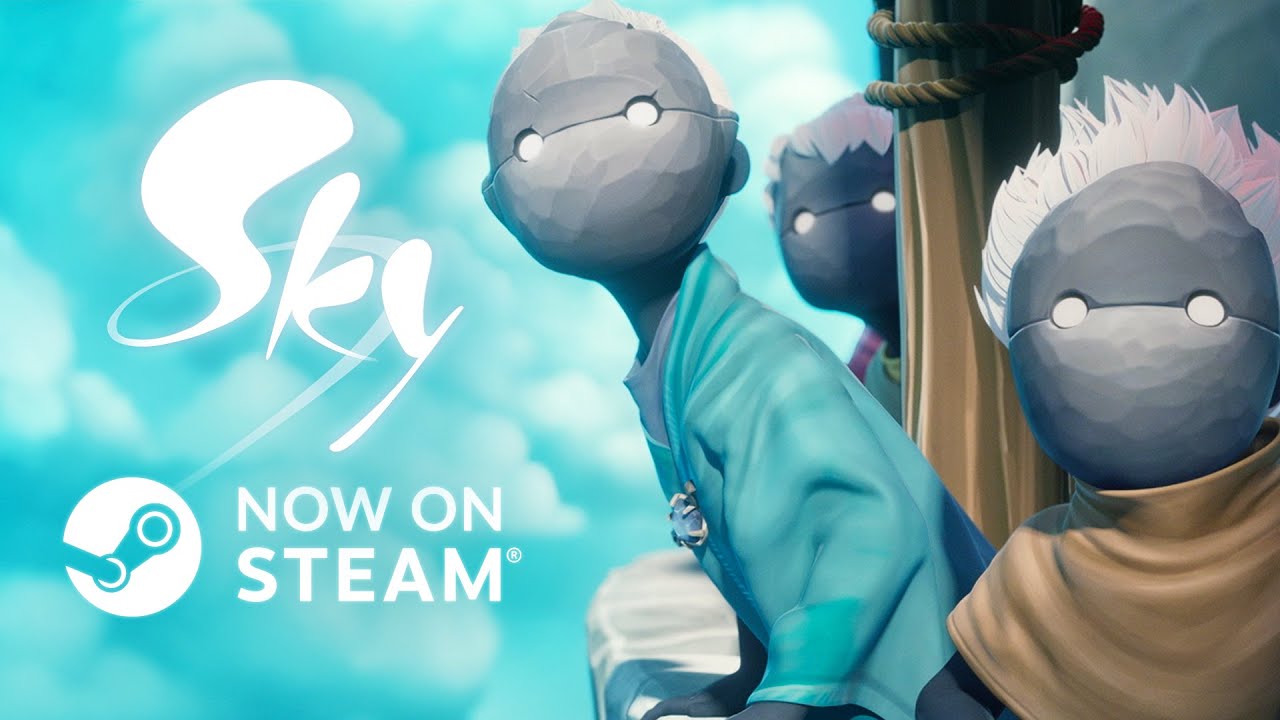
According to Chen, this outsized and apparent impact was part of the motivating force behind thatgamecompany's next game, the mobile-first and pacifistic MMO Sky: Children of the Light. Just as the studio had done for the console space, it wanted to "do something in the mobile industry to change people's view on games [at a broader scale]."
This meant wrestling with monetization options for about two years, which added up onto Sky's lengthier development time. Journey took thatgamecompany three years to make, while Sky (which featured a bigger team) ultimately took the studio seven years to realize and get out the door.
Even now, as Sky continues into its seventh year of operation as a live-service game, Chen still views the role of thatgamecompany as curators of experiences that center emotions. He says, "But ever since Journey, and continuing with Sky, we're playing with a new dimension. If you compare cinema and games, games have everything cinemas has, but they also have interaction with input and output. With Sky, I'm playing with a second instrument, which is social dynamics."
From the sounds of it, playing that second instrument not only saved thatgamecompany, which has been able to weather much of the games industry's turmoil over the last several years, but allowed Chen and his team to continue defying expectations and charting more emotional paths for games to follow.

