You are now subscribed
Your newsletter sign-up was successful
Want to add more newsletters?

Every Friday
GamesRadar+
Your weekly update on everything you could ever want to know about the games you already love, games we know you're going to love in the near future, and tales from the communities that surround them.

Every Thursday
GTA 6 O'clock
Our special GTA 6 newsletter, with breaking news, insider info, and rumor analysis from the award-winning GTA 6 O'clock experts.

Every Friday
Knowledge
From the creators of Edge: A weekly videogame industry newsletter with analysis from expert writers, guidance from professionals, and insight into what's on the horizon.

Every Thursday
The Setup
Hardware nerds unite, sign up to our free tech newsletter for a weekly digest of the hottest new tech, the latest gadgets on the test bench, and much more.

Every Wednesday
Switch 2 Spotlight
Sign up to our new Switch 2 newsletter, where we bring you the latest talking points on Nintendo's new console each week, bring you up to date on the news, and recommend what games to play.

Every Saturday
The Watchlist
Subscribe for a weekly digest of the movie and TV news that matters, direct to your inbox. From first-look trailers, interviews, reviews and explainers, we've got you covered.

Once a month
SFX
Get sneak previews, exclusive competitions and details of special events each month!
It's hard to believe that it's been a whole year since Jensen Huang came out at last year's CES to announce the RTX 50 Series GPUs. There's been major backlash against the AI super-giant's approach to this current generation of graphics computing, as it became clear that AI frame generation (which has more recently been dubbed "fake frames") was a much bigger priority than offering value for money with hardware power consumers can truly own in their gaming PC.
At CES this year, gamers didn't need to sit through Jensen Huang's AI-dominated, shiny jacket keynote speech to get the two minutes' worth of graphics card news they were hoping for. A separate community update for the brand's gaming arm was posted to YouTube. The main draw this year is an almost AMD-flavoured move that supplies a quality-of-life update for all RTX GPU owners.
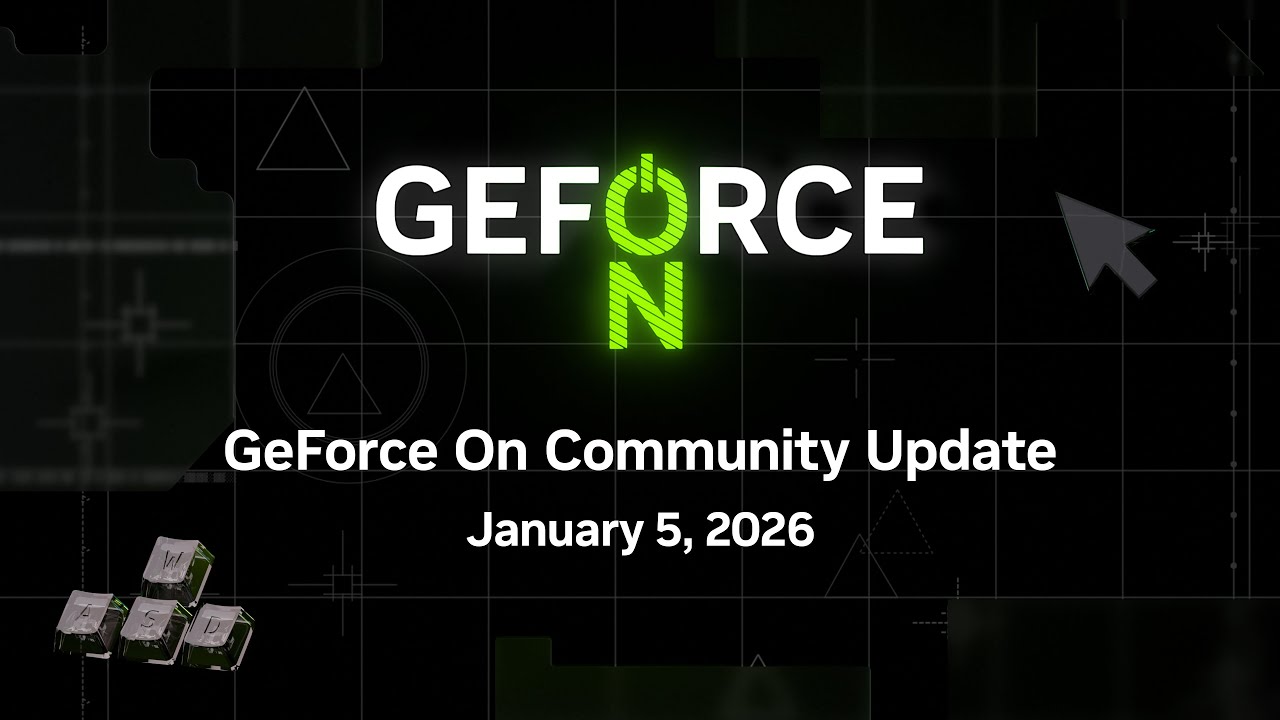
An update to Nvidia's DLSS upscaling tech, called DLSS 4.5, is available now, and it brings with it an update to the visual fidelity you can expect while boosting the frame rate of your games.
"We have dramatically improved super resolution with a new second-gen transformer model, and we've expanded the capabilities of Multi Frame Generation," said Bryan Catanzaro, VP of Applied Deep Learning Research at Nvidia.
Talking about DLSS 4.5, he said, "These improvements make super resolution performance and ultra performance mode so much better. It has superior anti-aliasing for smoother edges, clearer gameplay even with fast-moving objects, and improved temporal stability from frame to frame."

Essentially, the image quality when using these DLSS settings looks like it has less noise, fewer jaggy edges, and a more palatable look overall.
The fact this update is coming to all RTX GPU owners feels akin to AMD making FSR available on all GPUs and making it available on a driver level, even for unsupported games. While this is a really great quality of life for folks with older GPUs who are mainly using the performance and ultra performance DLSS settings, I'm not sure it's the gesture of good faith a lot of agitated PC gamers were hoping for.
As multi-frame generation also gets a big boost with DLSS 4.5, with a dynamic frame generation that balances out your boosted frame rate in line with your display, I do wish Nvidia had focused more on the issues with using this type of upscaling tech.

When I've played with higher 4x frame-gen settings turned on, not only is the image quality worse, but a floaty, uncomfortable degree of latency starts to become noticeable. Remember, this is supposedly one of the big selling points of Nvidia's 50 Series GPUs - you can tell why people aren't too happy.
Nvidia Reflex, the brand's way of combating the latency that comes with upscaling, doesn't feel like it's being given the same attention as the frame boosting tech is. Reflex originally launched in 2020, but it's never felt more vital to RTX owners than it does now, and with an updated 6x MFG (multi-frame generation) to contend with, it feels like it's going to struggle to keep up.
I know everyone's setups demand different things, but I would much rather have had a DLSS 4.5 boost from CES 2026 that focused on minimizing system latency when using the latest upscaling suite, rather than this one, which will likely make it worse.

In fact, in one side-by-side comparison Nvidia showed of Black Myth Wukong, DLSS 4 is shown producing 185fps using MFG 4x, and DLSS 4.5 using MFG 6x produces 245fps, but with 53ms of latency. I understand in real-time, that's not a lot, but it does pretty much confirm what I'm talking about. It doesn't feel like Nvidia is concentrating on the reasons why using this ultra-powerful form of AI upscaling tech doesn't feel as good as natively produced frames.
Of course, I haven't had time to test out the latest round of DLSS updates for myself yet, so I'm hoping the feeling of using MFG is balancing out now that Nvidia has had another year to train the upscaler.
Dynamic Frame Gen will also arrive later this year, and goes hand-in-hand with that new 6x total multiplier when using MFG. My hope is that this helps to balance out the bigger spikes of frames and latency, but again, it does seem strange that a Reflex 2 hasn't been properly thrown out to counter some of the bad press Nvidia's "fake frames" have built up in the last year.
You can also read up on the best RAM for gaming, the best gaming PCs in the UK, and the best computer speakers.

You must confirm your public display name before commenting
Please logout and then login again, you will then be prompted to enter your display name.