You are now subscribed
Your newsletter sign-up was successful
Want to add more newsletters?

Every Friday
GamesRadar+
Your weekly update on everything you could ever want to know about the games you already love, games we know you're going to love in the near future, and tales from the communities that surround them.

Every Thursday
GTA 6 O'clock
Our special GTA 6 newsletter, with breaking news, insider info, and rumor analysis from the award-winning GTA 6 O'clock experts.

Every Friday
Knowledge
From the creators of Edge: A weekly videogame industry newsletter with analysis from expert writers, guidance from professionals, and insight into what's on the horizon.

Every Thursday
The Setup
Hardware nerds unite, sign up to our free tech newsletter for a weekly digest of the hottest new tech, the latest gadgets on the test bench, and much more.

Every Wednesday
Switch 2 Spotlight
Sign up to our new Switch 2 newsletter, where we bring you the latest talking points on Nintendo's new console each week, bring you up to date on the news, and recommend what games to play.

Every Saturday
The Watchlist
Subscribe for a weekly digest of the movie and TV news that matters, direct to your inbox. From first-look trailers, interviews, reviews and explainers, we've got you covered.

Once a month
SFX
Get sneak previews, exclusive competitions and details of special events each month!
Film noir, art deco and the Mexican Day Of The Dead: these eclectic influences coalesced in the riot of colour and character that is Grim Fandango. The fact that director Tim Schafer was given creative freedom to run with such a wild collation of concepts was testament to the success of his previous game Full Throttle. That cinematic biker gang adventure sold well enough for LucasArts to encourage Tim to keep pursuing the kinds of creative whims that had shaped standout point-and-click titles such as Day Of The Tentacle.
This time around however, Schafer had his eye on how other contemporary releases were pushing forward into new realms of 3D graphics. A new action game called BioForge was a particular influence with its polygonal characters moving around static, pre-rendered backgrounds. It was something Tim thought could work perfectly for a modern adventure.
Bare bones

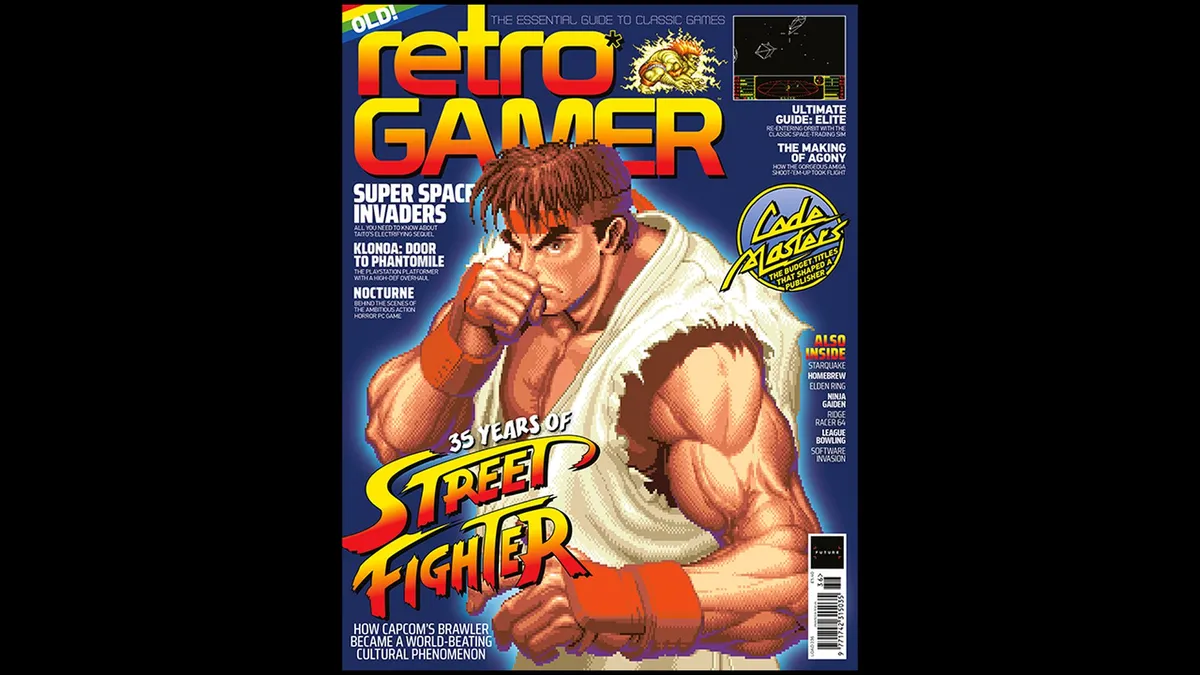
This feature originally appeared in Retro Gamer magazine #272. For more in-depth features and interviews on classic games delivered to your door or digital device, subscribe to Retro Gamer or buy an issue!
Schafer tells us both BioForge and Alone In The Dark were inspirations here. "With BioForge it was so dramatic, the way the camera would cut as you moved between scenes," he recalls.
"Playing it, I was like: games are about to get a lot more cinematic. That was also why I liked tank controls at the time. You could navigate through multiple camera angles by just pushing forward. I think people have since soured on tank controls but they were really popular at the time."
As you move around a series of vibrant, Fifties art deco-inspired backdrops, which were brilliantly designed by concept artist Peter Chan, Manny will subtly tilt his head to look at anything noteworthy you can collect, interact with or examine. It's a clever feature enabled by a new 3D engine called GrimE that was built specially for the game, replacing SCUMM (Script Creation Utility For Maniac Mansion) which had been used to build previous LucasArts adventures. GrimE was also soon after used to create Escape From Monkey Island, the fourth game in the beloved pirate franchise and the first to use 3D graphics.

People have since soured on tank controls but they were really popular at the time
Tim Schafer
Despite these advances and innovations on the old point-and-click formula, Grim Fandango retained a lot of the elements LucasArts fans already adored, including witty branching dialog.
The captivating storyline takes strong cues from film noir classics Casablanca and Chinatown. It's a tale that begins at the Department Of Death: a bureau built on selling newly deceased souls travel packages to help them make their way through the Land Of The Dead. While working as a lowly salesman at the Department, Manny brings a new arrival to the afterlife called Meche.
Her spotless moral record means she should in theory qualify for a ticket on the special Number Nine train heading straight to that most sought after destination, the Land Of Eternal Rest. Corrupt forces are afoot though, leading Manny to join an underground revolution, become a casino owner and captain a ship as he pursues Meche across oceans and time periods, all while sinister forces try to keep her from her just rewards. It's a grandly ambitious and frequently hilarious tale, cinematically told through frequent cutscenes and clever in-game narrative.
A world of freedom

Across the four chapters of the game, each of which takes place one year apart on the Day Of The Dead, there are a steady stream of taxing puzzles to overcome. These challenges seem more tactile than earlier LucasArts games and less inventory based. Schafer reflects that this was a natural evolution.
"After The Secret Of Monkey Island, while working on Monkey Island 2, me and Dave Grossman and Ron Gilbert would always be like, 'With some of these puzzles, your inventory is getting so cluttered.' The interface for Maniac Mansion had 15 verbs, then we got it down to nine for other games. Full Throttle had three. So we were trying to further simplify things in Grim," he says.
Some puzzles came about because of the potential afforded by a 3D world. "The physical world gave us possibilities we didn't have before like driving a forklift around," Schafer continues. "The feeling of being in a forklift and jamming it through elevator doors presented itself because of being a 3D character in a 3D space."

As the game progresses, Manny roams the evocative streets of Rubacava, which is a highlight among environments thanks to its late-night, casino-town atmosphere and wide range of engrossing locations to explore. The story shifts between open areas like this and confined, narrow scenarios with an almost escape room quality.
"You do think about pacing, and ups and downs with the levels of puzzles," Tim reflects on designing the locations of the game. "In Grim we were thinking mostly of hubs. Some spaces ended up being transitional between the hubs.
"Whenever we have a non-linear series of puzzles, you need to open up into a bigger space like Rubacava or El Marrow, and then in between those you have a series of pinch-points with more linear puzzles just to get some variety."
Grim sounds

The physical world gave us possibilities we didn't have before
Tim Schafer
As well as artwork and game design, it would be remiss of us to neglect another ingredient that equally helped make the game sing: its award-winning soundtrack. Composed and produced by Peter McConnell, in Schafer's words, it mixes "mariachi bands, jazz and crazy wailing reed instruments" to elevate the atmosphere of the game in a striking way.
When Grim Fandango was remastered by Double Fine Productions in 2015, the soundtrack was re-recorded by Peter McConnell with the Melbourne Symphony Orchestra, replacing synthesised sounds with real instruments. PC Gamer described it as, "One of the best soundtracks in PC gaming history."
Grim Fandango was acclaimed on its 1998 release and won several Game Of The Year awards. Despite being met by adulation by many of those who played it, the commercial tides were changing for adventure games as a new millennium approached. LucasArts soon after moved away from creating adventure games to focus more on Star Wars action games.

Schafer left the company and founded Double Fine Productions, but eventually resurrected Grim Fandango years after it fell out of print by licensing the IP from Lucasfilm's parent company Disney.
The remaster arrived in 2015 and made the game widely available on all modern platforms. It means enjoying it today is very easy, and you can even switch back to the original graphics if you prefer a retro experience.
Schafer has numerous highly regarded games to his name, but he clearly holds a special place in his heart for Grim Fandango. When we speak, he even shows us his Manny Calavera phone case. "Beyond me, there was a collection of some of the most talented people I've ever worked with, all in one place at one time and doing their best work," he says on reflection. "It created this master collaboration and a really unique world."
Read our Grim Fandango Remastered review for more on the cult classic action-adventure
You must confirm your public display name before commenting
Please logout and then login again, you will then be prompted to enter your display name.