



Game Outriders
Developer People Can Fly
Publisher Square Enix
Platforms PC, PS5, Xbox Series X
Release TBC 2020
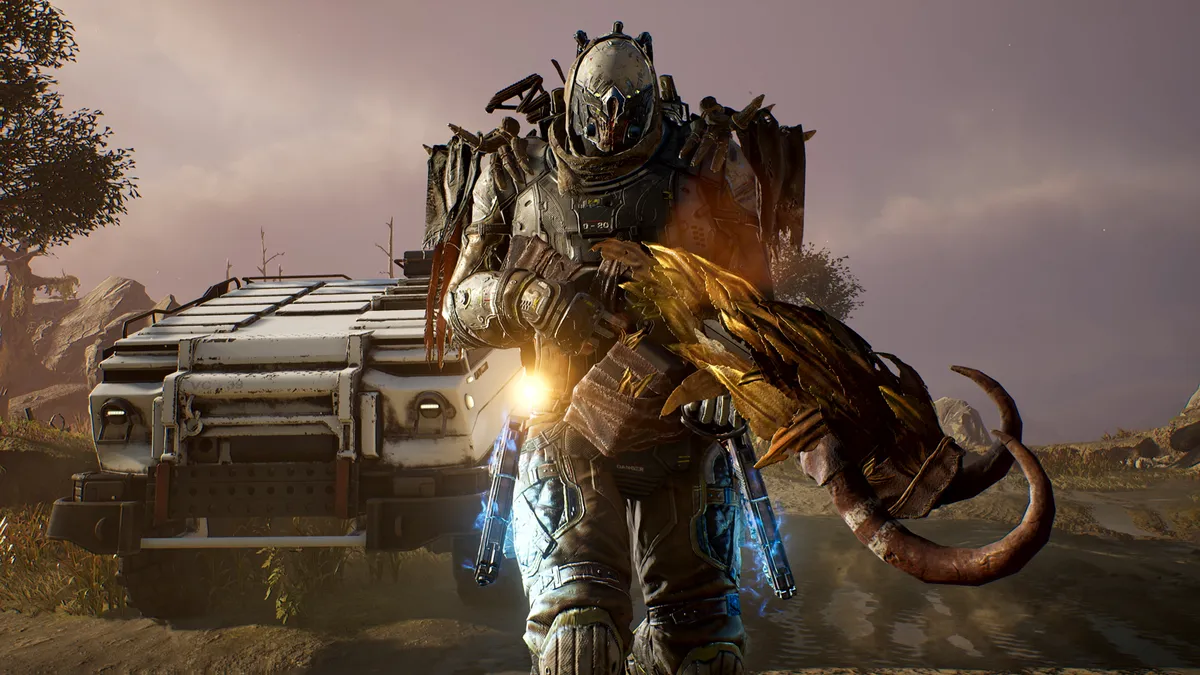
People Can Fly wants to change your perception of Outriders. Unveiled back in February, the studio struggled to break through the noise – an industry on the cusp of the next-generation can be unforgiving in the way that it allots its attention. It wasn't the way the game played that drew the ire of the internet, necessarily, but the way that it looked. As if People Can Fly were still clinging onto the colour swatches it was gifted by its previous creative partner, Epic Games, so many years ago; Outriders appeared to be seven shades of gunmetal grey, the palette that helped define Gears of War's muddy aesthetic throughout the previous generation. That wasn't a mistake the studio was willing to make twice.
"There was a lot of positive reaction from the people that have played the game," says Bartosz Kmita, creative director of Outriders, "but there was some unexpected, less positive reaction about the mood of the game and its tone. For example, the brown colour palette that looks like it had come from the older generations of the console – that was quite unfortunate for us. That's why we wanted to show a lot more of the content from different levels, because we don't want people to think that this is all that the game has to offer."
Welcome to Enoch
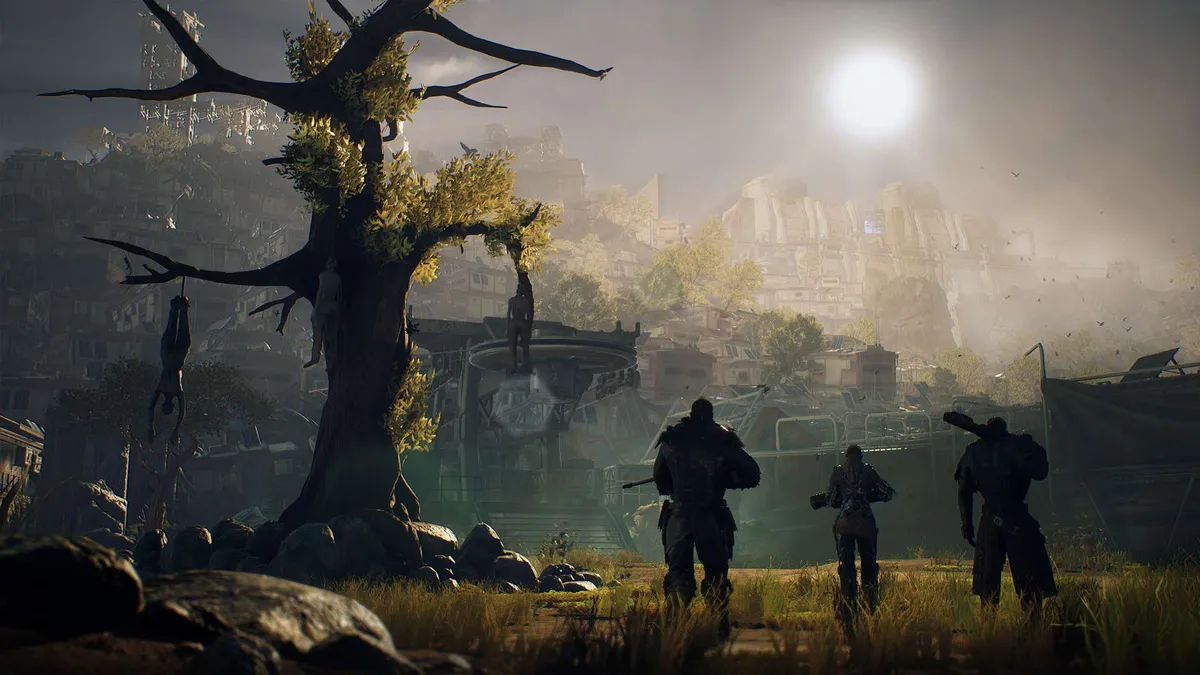
All that is to say that our latest look at Outriders presents a world with more vibrance and personality. We see the planet of Enoch in a new light, with leafy green foliage beginning to resurface after a spike in radiation damaged the land three decades earlier, as well as a glimpse at the hostile fauna that has been irretrievably warped by the fallout of a nuclear reactor going critical. Giving us a look at these beautiful new biomes takes some of the pressure off of People Can Fly; it lets the eye refocus on the action rather than on one combat arena's muddy art direction.
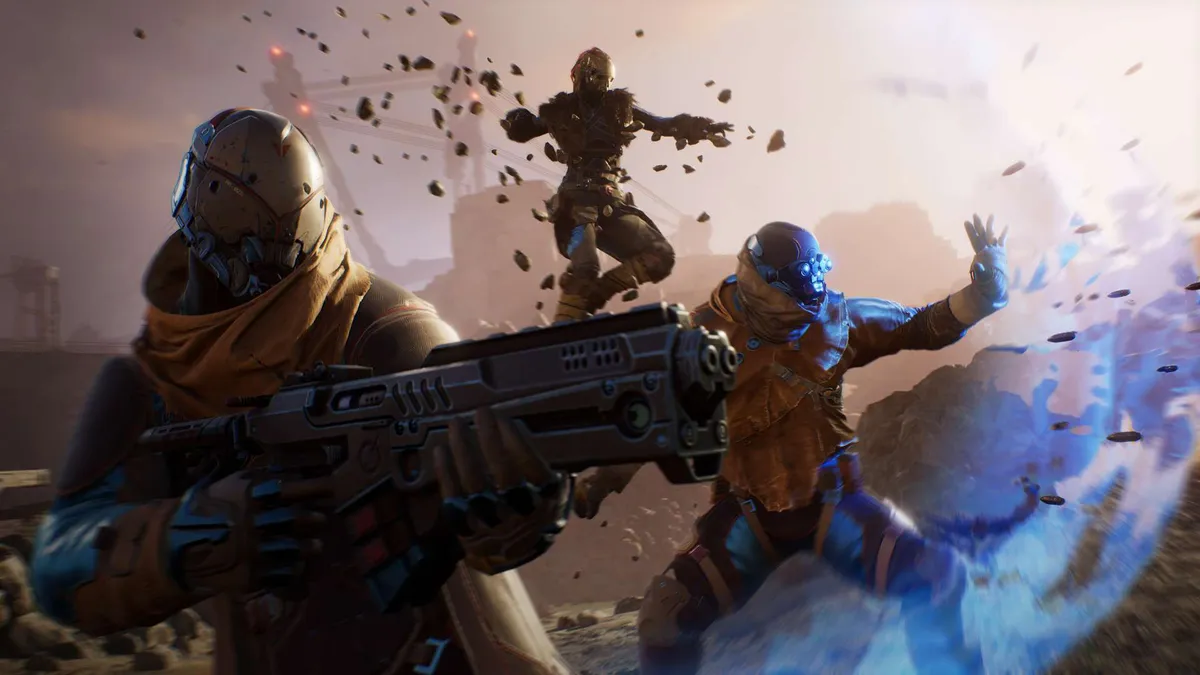
We're now starting to get a better sense of what the studio is trying to achieve here. Here we have a cooperative RPG-shooter hybrid composed in a resolutely old-school configuration. It's easy to draw comparisons to the likes of Destiny 2 and Anthem – live-service shooters that are designed to live in perpetuity – when you focus on elements such as designated classes, abilities attached to cooldown timers, an endless arsenal of lootable weapons, and your screen filling with a cascade of numbers. But a game as a service Outriders is not. "Our old-school vibe is totally different to the competitors," Kmita continues. "First, we are not making a game as a service. The content isn't chopped into downloadable content that we release every month; we are shipping with a finished story. Everything is there from the beginning, out of the box – the end-game is already in there as well, so you won't have to wait two to three months after release."
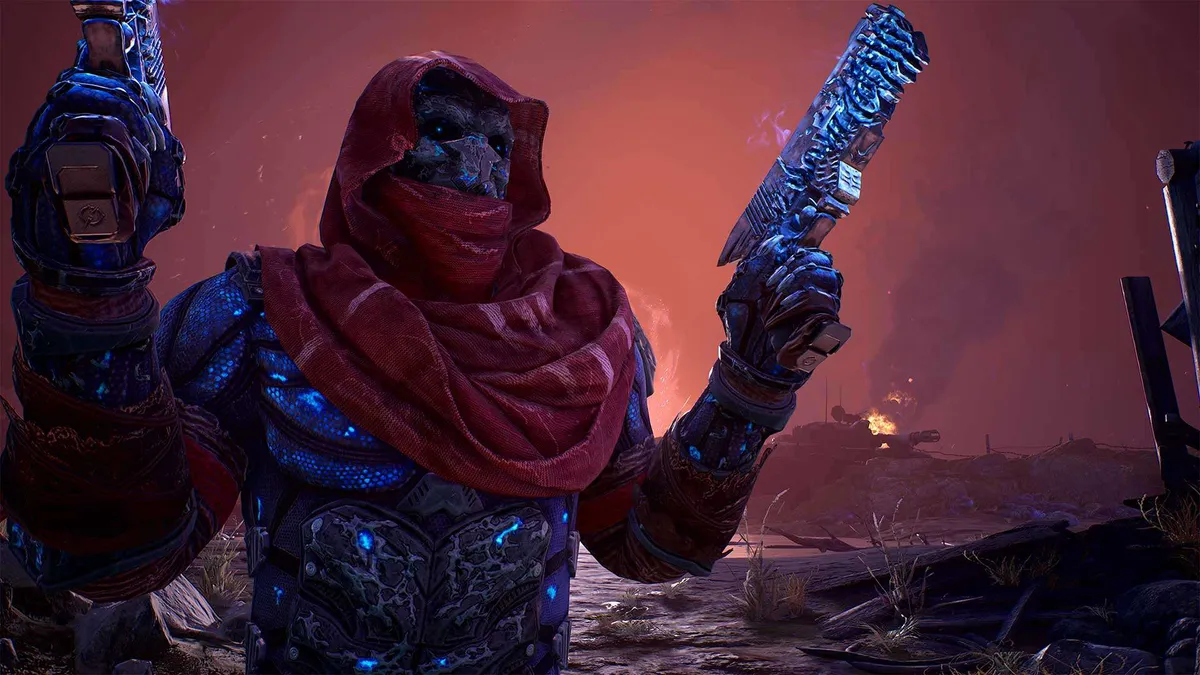
For those of you out there with live-service fatigue, this will come as a welcomed push back against a dominative trend in the industry. Outriders is designed in such a way that solo and cooperative players alike will have the space to really invest in building a character that reflects their preferred playstyles, rather than the established meta of the month. With four character classes to choose between – Devastator, Pyromancer, Trickster, and another to be revealed later – you'll have the flexibility to really dig down into the detail, investing in the skills, abilities, and traits that appeal to you in this war torn world.
Of course, none of this would matter all that much if Outriders was something you could tear through in a couple of nights and never feel the need to return to it again. Thankfully, People Can Fly is investing in a dynamic difficulty configuration that should keep you and your buddies busy long after the game launches.
Up the ante
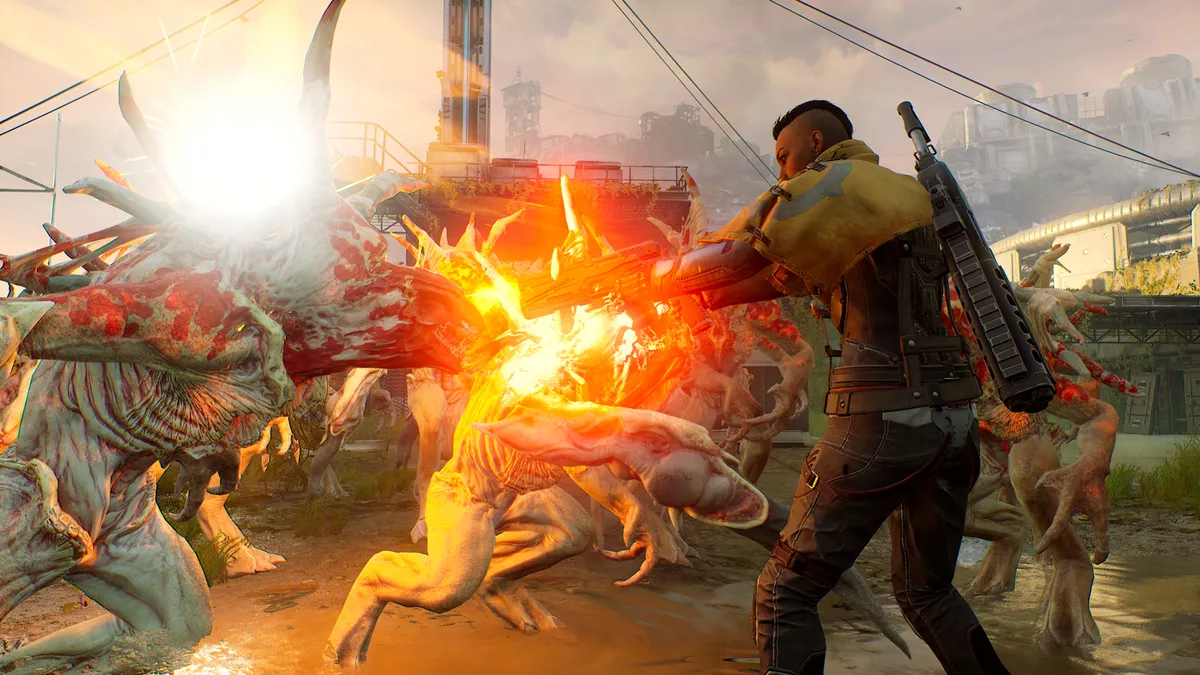
Outriders has the type of dynamic difficulty offering that I wish more online co-op games of this ilk would employ. To pare it back to its simplest form, Outriders features a robust system that lets you fine-tune the challenge as you go, organically increasing the difficulty to better reflect your skill level and growing competence with the game's overlapping RPG systems and shooter mechanics.
"There's the hero points, the skills, the combinations of the skills, the loot, and all of the modifiers. There are so many combinations and they can be so significant," says Piotr Nowakowski, Outrider's lead game designer. "The difference between a player who is just picking up random items and having fun playing, compared to the player who combines them all delicately to find the deadliest combinations, is so significant that we had to build something for the difficulty."
Nowakowski tells me that the studio realised early on that it would need to put the power to adjust difficulty into the hands of the players, especially as the variety of playstyles and loot/gear combinations became apparent through the hundreds of hours of playtesting People Can Fly has already put into the game. An important system, but one that's potentially more difficult to understand than it needs to be. "Okay, so our game has really complicated…" Kmita begins, in what is either miss-speak or a freudian slip, "...not complicated, but complex mechanics."

"In our tests, most of the players are not able to climb to the very top of the World Tiers – it's really challenging"
Bartosz Kmita, creative director
"There's a lot of elements to it," he continues, explaining that difficulty has been explicitly designed in such a way that those who are here for the story can do so without punishment, but those in to Outriders for a challenge will be able to turn up the heat as desired. "That's why we have this spectrum of 15 World Tiers. To unlock the tiers, you need to prove that you are capable of playing on the higher difficulties. Not only through skill but by creating the proper character builds."
There are two XP bars that you need to be aware of in Outriders. The first tracks the progression of your character, a level that governs the loot you can equip and the abilities you can unlock and equip. The second tracks your World Tier – fill the bar by succeeding in combat on the highest tier available to you and eventually you'll earn the right to fight more powerful foes. There are 15 of these in total, and moving between tiers shifts enemy stats – increasing damage, armour, health, and enemy level – as well as the kinds of rewards, weapons, and accolades you can earn for surviving.
Experience earned through combat will contribute to filling the bar (although XP awarded for completing quests won't), while dying will knock the progression bar back. This is an organic system designed to ensure that those looking for a challenge are constantly being tested, retooling their equipment and loot to face the danger the World Tier presents. People Can Fly expects this to be such a test that most players won't even reach World Tier 15 by the time they complete the game the first time through. "In our tests, most of the players are not able to climb to the very top of the World Tiers. It's really challenging, it requires you to find the proper combinations and to really understand how the mechanics work," says Kmita.
Striking a balance
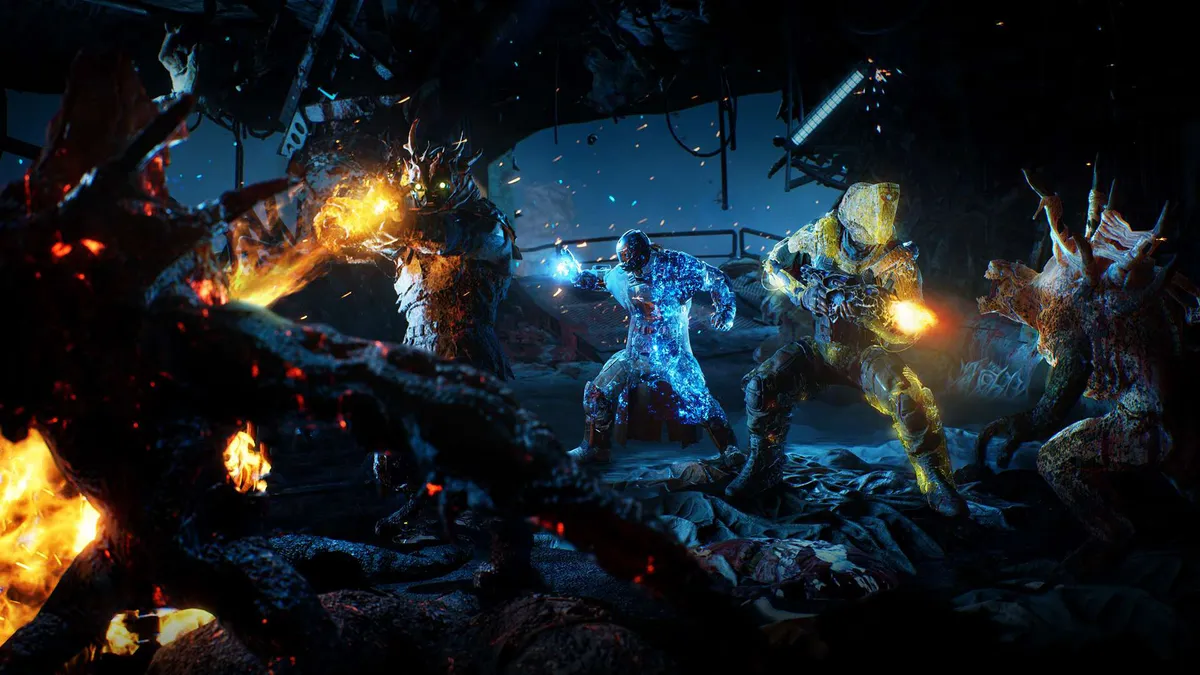




This World Tier system also scales with the number of players in your party in an effort to keep the difficulty balance fair for solo players, but without an opportunity to sample this for ourselves it's difficult to know just how significant this will be. Still, it's an intriguing, if not messy, way of keeping challenge consistent across a co-op experience. With the option to travel back to previously completed missions to attempt them on tougher World Tiers, not to mention the amount of permeations available to players through loot, gear, and character creation, it appears to be a smart way of keeping us engaged in Outrider's action over the long haul.
The more we see of Outriders the further it carves itself a space in a crowded launch window for the next-gen systems. For Kmita, that'll come as welcomed news. "If I knew at the beginning that this was the direction we were going from, I would probably change the direction," he tells me, laughing. I didn't know about all the problems that we would meet during our development; there was a lot of challenges. Not only because it is a huge game, not only because it's a multiplayer game (which always adds additional complexity), but because we are giving so much freedom to the player – there are hundreds of different ways to play [...] but it'll be worth it, because we have had a lot of fun making and playing this game."
GamesRadar+ is exploring the games that are helping to shape 2020. For more, click through to our Big in 2020 coverage hub.

