
Fable's legacy is memetic, if not iconic. The pursuit of poultry for its own sake. A broad spectrum of diversely unconvincing British accents. Playing subtle social games in high society by strategically dancing or farting. But no element resonates in people's memory more than its morality, as Fable as a series considered ethics to be so objective that characters could literally grow halos or devil horns, depending on their actions.
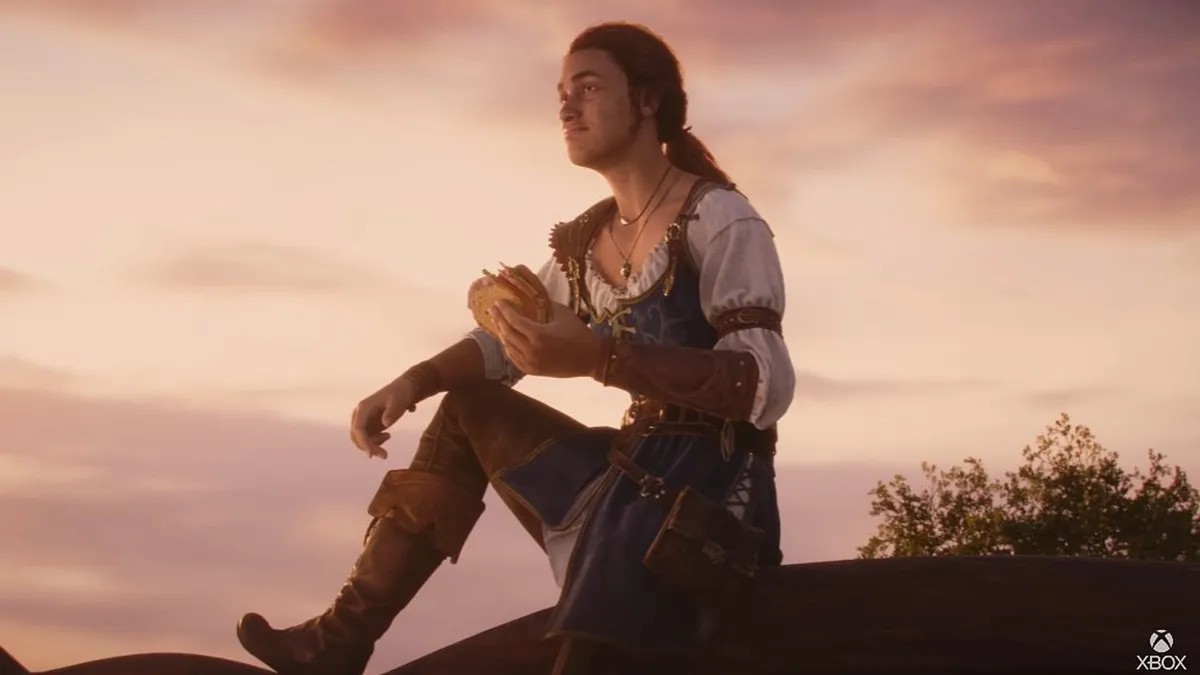
With the upcoming reboot, that's out the window. What we saw of Fable 4 in the recent showcase made it clear that your choices will no longer be labelled objectively good and evil – which means no more angelic or demonic transformations, depending on how much you tip your waiter. Some fans seem pretty disappointed by this, but I'm not one of them. Not only is that framing a relic of the times, unsuitable for the mid 2020s, but having gone back into them recently, the original three games convinced me that it's time to move on – there's nothing left for them to do.
Ethical heroism


Why Playground Games' ambitious open-world Fable reboot is a fresh start for the series
Fable's fascination with good and evil was locked in from the beginning, with the first game's cover art depicting an innocent Anakin Skywalker lookalike staring at a reflection in which their evil future self looms ominously. It was a game where you played a Hero, but in the context of Fable's lore, that word only meant "inherited magical superpowers" and didn't require any actual virtuousness from the player.
This being the mid-2000s, it was an early example of the "choices matter" obsession that gaming would eagerly run with for the next decade and beyond. Fable 1 and 2 took a very simple view of ethics. There was no ambiguity in those games, only the oppositional choice between valorous generosity and cruel selfishness. A player might be given two choices of quest, for example: defend a caravan of merchants from bandits, or side with the bandits. And no attempt to humanise the highwaymen either! No desperate people or honorable thieves, merely one-dimensional cutthroats, all black hoods and serrated blades. Even the neutral characters, like Garth in Fable 2, are aggressively neutral, as though to place themselves in the context of Albion's simplified extremes.
It is, to put it mildly, a naive view of the world, but I can't say it didn't make sense at the time. Fable's storybook tone, cartoonish humor, satirical edge and over-the-top characterisation lent itself to these simple portrayals of heroes and villains. But this approach came back to bite developer Lionhead in Fable 3.
Dork fantasy

You could build a utopia, but it'll be a damn short-lived one.
Fable 3 focuses around a revolution against a tyrant king – a good start – but as you play, that turns out only to cover the first two acts.
After throwing the regent in the dungeon, he tells you that all his cruelty has been to prepare Albion for an eldritch horror that's on its way to slaughter everybody one year from now. Draining resources, keeping people in line – yeah, out of context it seems harsh, but actually it's all been to hold back the armies of Nyarlathotep and ensure that at least some of humanity might survive in the aftermath.
An interesting dilemma! And after ousting him from the throne, it means all the responsibility for holding back the cosmic evil now falls on you, including those same choices. In practice, that means a series of binary options representing harsh austerity and exploitation on the one hand, versus the noble-but-short-sighted policies on the other. Do you build more expensive orphanages for the kiddies, emptying the royal coffers, or send all those homeless brats to the armament factories? You could build a utopia, but it'll be a damn short-lived one.
Sadly, Fable 3 shatters like glass under this pressure, as its systems just aren't built for moral complexity. For one thing, the ability to donate your own money means you can just do minigames for three days and pay for the war that way – hardly narratively satisfying or in keeping with any of the themes.
But even if you're playing to the game's moral element, the characters around you don't acknowledge that additional pressure. It means all your harsher policies are still labelled as simply evil, even in the justifiable context of trying to save everybody's lives. And if you instead decide to fund the arts and save the whales, Albion will get slaughtered by underworld demons, yet the last handful of survivor NPCs in the rubble are still mindlessly cheering your wealth distribution policies. Your halo remains untarnished. Clearly, the execution here left something to be desired.
The moral of the story
In the years since Fable 3, gaming has turned away from binary good/bad morality almost entirely. The very notion of it now seems antiquated (just look at how the Fallout series dropped karma).
Now it's far more about faction alignment and morally grey choices, which does make sense. Gaming has grown up – albeit slowly – and while narratives about objective good and evil aren't uncommon, they at least aim for a level of nuance. Life has never been as simple as horns and halos.
Fable 3 proved that complexity doesn't gel with objective, storybook morality, so if one of them has to be sacrificed…. Well, I'll be able to wear hats again. . Besides, turning the focus more onto Albion's population of bellowing, opinionated oafs can only make the game more interesting, not less. Playground's upcoming Fable looks to prioritize substance over style – and I'll take that over a Halloween costume.
Fable is one of the hottest upcoming RPGs on the way in 2026

You must confirm your public display name before commenting
Please logout and then login again, you will then be prompted to enter your display name.


