
 Join The Community





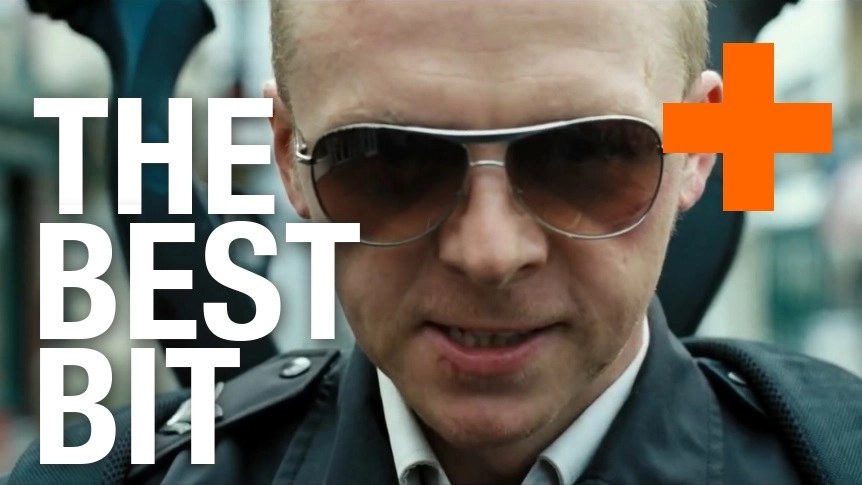
Hot Fuzz is the greatest comedy of the 21st century, and easily one of the best in movie history. That's not a claim I make lightly, but it's hard to argue with Edgar Wright's tightly plotted tale of crime and justice in a small, rural English community. It's a parody and pastiche of action and buddy cop movies, yes, but to merely describe it as such, to put it in the same pigeonholed genre descriptor as films like Police Academy or Hot Shots, is one of the greatest insults I can imagine. Hot Fuzz is a goddamned masterclass in physical comedy, comic timing, and expert wordplay - and it all culminates in one of the funniest, most relentless action sequences ever committed to film.
Let's back up a bit and remember how we get there. For all of its rapid-fire quips, references, and punnery, Hot Fuzz is actually a relatively slow burn of a film. It methodically and purposely spools out its characters - the idealistic and meticulous Sergeant Nicholas Angel played by a pitch-perfect Simon Pegg, Danny Butterman as his loveable, film-obsessed oaf of a sidekick, played by an equally wonderful Nick Frost - while introducing us to the host of citizens who inhabit the sleepy model village of Sandford. Hot Fuzz telegraphs its villains so comically obviously - supermarket (I'm sorry, supermarche) owner Simon Skinner (impeccably played by a scene-chewing Timothy Dalton) jogs up to Angel loudly declaring he's a slasher… of prices, imploring Angel to 'catch him later' - because the real twist is that nearly everyone in the village is in on the rash of murders Angel is investigating.
For the first 90 minutes or so, Hot Fuzz is pure detective story, delving into the mystery and building its characters, even when it's making Bad Boys and Point Break references. Butterman loves action movies but he's never seen action, Angel's seen his share of it but takes no pleasure in it, and the two form an unexpected bond through the movie. Wright is clearly riffing on buddy cop movies, specifically the work of Michael Bay and his signature penchant for explosions and overblown camerawork, but when this approach is applied to the drudgery of paperwork or procedural investigations in a small, backwoods town, everything becomes absurd. And even though a series of horrific deaths happen on-screen, the film doesn't quite go off the rails.

And then it goes off the rails. Hoo boy, does it ever.
Angel discovers the plot by the Neighborhood Watch to clean up the village by any means necessary and decides to take the law into his own hands. The final third of Hot Fuzz is a nonstop barrage of carnage, as Angel and Butterman move through the town and effectively mow down a small population of senior citizens. It's as if Hot Fuzz was saving up all of its ammo for this one moment, to unceasingly feed through a machine gun until the last bullet is spent. The two cops embrace every trope in the action hero playbook - riding into town on horseback, leaping from cover with two guns akimbo, all accompanied by a rapid-fire series of jump cuts, camera sweeps, and over-the-top stuntwork.
The old shop owner fires at Angel with a high-powered rifle at least twice her size; the kindly town doctor takes aim with a shotgun. The townspeople are dressed like models in a Land's End catalog. There are potted petunias strewn about. A used book sale fills cheap tables in the middle of the courtyard. A middle-aged woman rides her bike down cobbled streets, firing twin pistols, winging Angel in the shoulder, only to be stopped when Butterman opens his door, flipping her ass-over-teakettle. The dissonance is incredible.
The shootout moves into a bar, the supermarket, a car chase, and ultimately culminates in a battle where its physical comedy, wordplay, and movie references collide in spectacular fashion. After dodging the pesky swan, Angel makes his way to a model replica of the model village (the scenery is a pun, oh my God), and commences the final showdown with Skinner, the two fistfighting amongst tiny buildings like a pair of giant kaiju. There are numerous callbacks to prior jokes - the kid named Aaron Aaronson, Skinner impaling himself on the model version of the steeple of the church he broke off to kill the reporter earlier in the film, Butterman firing his pistol in the air and going "Ahhhhhhhh!" like in Point Break, the low-flying chopper overhead straight out of Bayhem - the references come so fast and are so densely packed that you probably won't notice them all in a single viewing.

But that's what makes Hot Fuzz so endlessly entertaining and infinitely rewatchable. Just like the movies it’s using as inspiration, the action (and jokes) come at a rapid fire pace, a sensory onslaught of sights and sound. But Hot Fuzz does Bayhem one better by taking the film language of overload and infusing every single frame with intelligently-crafted humor, in-jokes, and references to other films. The final showdown isn't just a good gag - in the words of Sergeant Angel, it's a no-holds-barred adrenaline-fueled thrill-ride.
The Best Bit focuses on the special moments, scenes, and elements of movies and TV that make them worth watching. It arrives every Wednesday at 0900 PST / 1700 GMT. Follow @gamesradar on Twitter for updates.

