Join The Community




2024's Broken Sword: Shadow of the Templars remaster is a broadly well-regarded revival of a classic point-and-click adventure, enjoying overwhelmingly positive Steam reviews even with its use of AI upscaling. But for the devs at Revolution Software, AI was more trouble than it's worth. They're ditching the tech for the upcoming remaster of the sequel, and judging by the success their Kickstarter has already seen, fans are happy about the transition.
"This game has over 55,000 unique frames of animation, and is created by a team of talented classical animators who have redrawn and reanimated this game frame by frame," Revolution says in an FAQ page for its Broken Sword Smoking Mirror: Reforged Kickstarter. "Adding subtle, context-sensitive characterisation and human expressions is something that AI can't do, and never will be able to do."
The Kickstarter's relatively modest initial goal of £50,000 (around $67,000 USD) was smashed in under 15 minutes. As I write this, fans have pledged £314,823 (around $422,648 USD), absolutely destroying the target well ahead of the Kickstarter's close next month. You can draw your own conclusions about whether the instant success of the Kickstarter is related to the decision to ditch AI upscaling, but certainly, community goodwill around the new remaster is strong.
Article continues below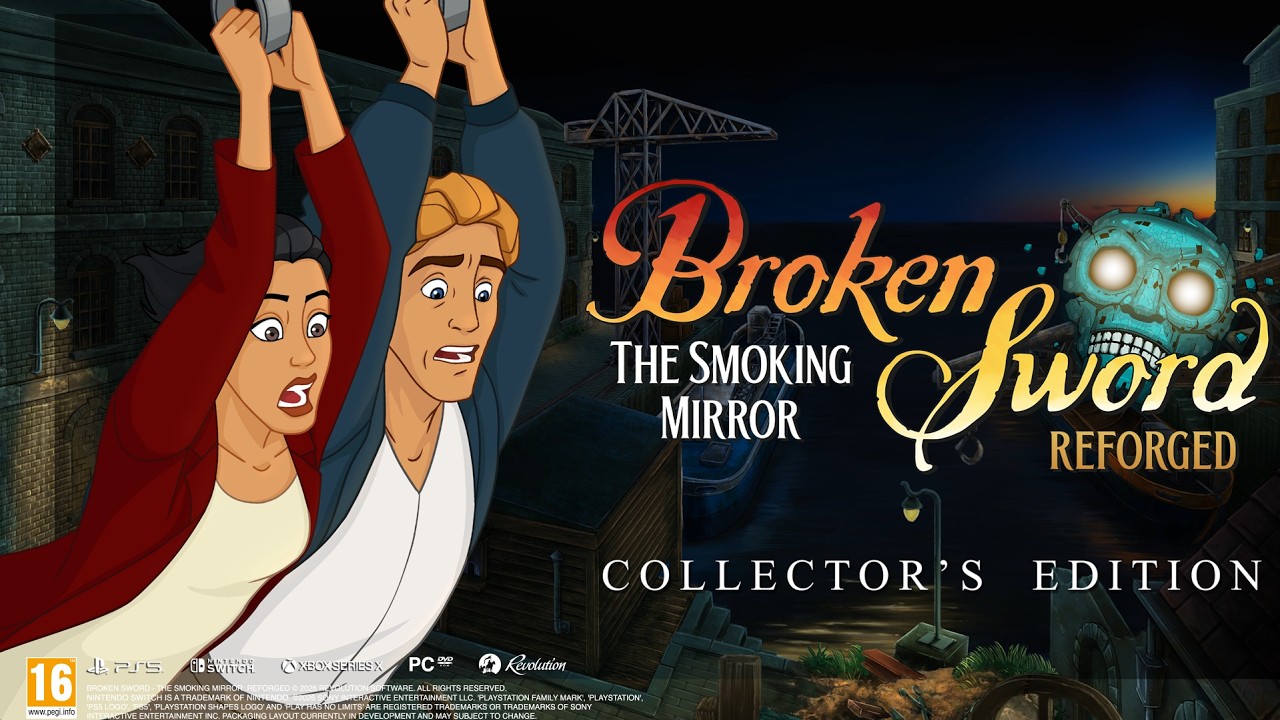
Revolution tried to use AI the right way the first time around, building an internal model trained on the studio's own work in order to handle the upscales. The problem was that the images it spit out just weren't very good. "The result was not enormously satisfactory, because there wasn't really enough detail," Revolution head Charles Cecil told GamesIndustry.biz last year.
"In the end it was a lot of work that could have frankly been spent directly on the game," the studio adds in its Kickstarter message, "so that's what we're doing this time around!" Then, with a heart emoji, we get the sentiment that's taking an increasingly solid hold in the creative community: "No AI, just humans."
Certainly, AI upscaling has offered impressive results in certain circumstances, as with Nvidia's DLSS tech. But Nvidia is now muddying its own waters by labeling its newly developed "AI slop" filter as DLSS 5, sacrificing the name of a useful piece of technology on the altar of a bedazzling filter that turns harried Resident Evil protagonists into TikTok stars.
I don't have an ethical problem with using AI to upscale low-resolution retro games for modern displays – I just think the results usually look terrible, and I've been saying as much for years. Clearly, the devs at Revolution have come to a similar conclusion, and I'm glad they're putting in the elbow grease to bring back their Broken Sword sequel the right way.

You must confirm your public display name before commenting
Please logout and then login again, you will then be prompted to enter your display name.