You are now subscribed
Your newsletter sign-up was successful
Want to add more newsletters?

Every Friday
GamesRadar+
Your weekly update on everything you could ever want to know about the games you already love, games we know you're going to love in the near future, and tales from the communities that surround them.

Every Thursday
GTA 6 O'clock
Our special GTA 6 newsletter, with breaking news, insider info, and rumor analysis from the award-winning GTA 6 O'clock experts.

Every Friday
Knowledge
From the creators of Edge: A weekly videogame industry newsletter with analysis from expert writers, guidance from professionals, and insight into what's on the horizon.

Every Thursday
The Setup
Hardware nerds unite, sign up to our free tech newsletter for a weekly digest of the hottest new tech, the latest gadgets on the test bench, and much more.

Every Wednesday
Switch 2 Spotlight
Sign up to our new Switch 2 newsletter, where we bring you the latest talking points on Nintendo's new console each week, bring you up to date on the news, and recommend what games to play.

Every Saturday
The Watchlist
Subscribe for a weekly digest of the movie and TV news that matters, direct to your inbox. From first-look trailers, interviews, reviews and explainers, we've got you covered.

Once a month
SFX
Get sneak previews, exclusive competitions and details of special events each month!
Nobody could have blamed Naughty Dog if it had continued to make Crash Bandicoot games after the '90s came to an end. After all, its four Crash PlayStation titles had sold in their millions and Crash was arguably the console's unofficial mascot. But as the PS2 was launched in 2000, the studio was working on something different for the new console.
Rather than a solo hero it created a pair of protagonists, in the form of precocious teenagers Jak and Daxter. Then instead of depicting these young heroes' world as one defined by good versus evil, like Crash Bandicoot's, Naughty Dog opted to create an environment that was shaped by mysterious, ancient beings called Precursors.
Just as important as the place they called home was that Jak and Daxter should have depth of character and believable reasons for their actions, as the writer/designer of their debut title Dan Arey explains. "I wanted Jak to have a purpose that wasn't just rescuing a princess or collecting coins, and then Daxter was our wonderful sidekick – he made everything a counterpoint or hilarious," Arey notes.
Dynamic duo

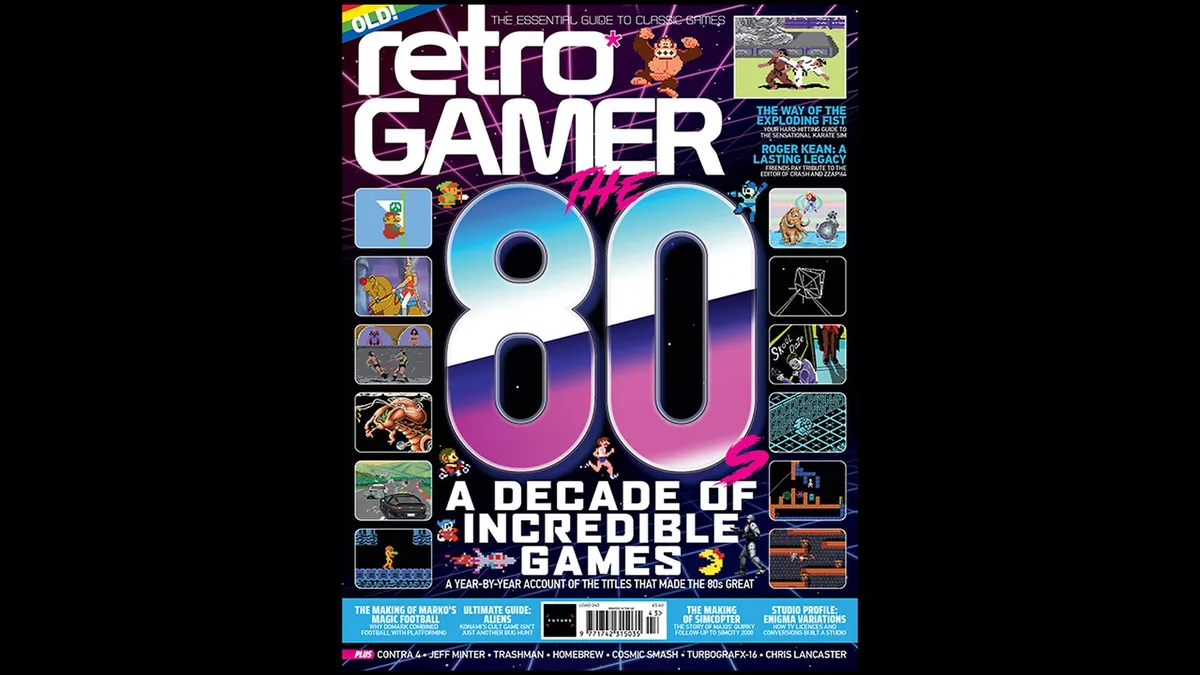
This feature originally appeared in Retro Gamer magazine #276. For more in-depth features and interviews on classic games delivered to your door or digital device, subscribe to Retro Gamer or buy an issue!
"We had started with this idea of a rich, beautiful world with some strange mystery behind it, and that was what the Precursors became.
"If you went to their island you found Dark Eco, which was energy with very special properties. We were telling you not to go to that island because there was Dark Eco there. Of course Jak, being a rebellious teenager, does just that, and then his best friend Daxter falls into this vat of Eco and becomes an Ottsel – a part otter/part weasel!"
Jak And Daxter's world required the talents of Naughty Dog's storytellers just as much as its level designers and artists so that its plot, gameplay and aesthetics had equal appeal. The studio could have considered these distinct disciplines separately, but instead it looked to how it could weave them together to form a greater whole, as Arey points out. "As the writer, as well as the game designer, I wanted to tell a story that had mystery and suspense," Arey reasons.
"A term we used was 'Narrative as reward', which is that the narrative itself was part of the joy of the game. This was a world that had to be explored, and you were going to have to figure out what Eco was and who the Precursors were. Then because we were an art-centric studio there was a constant push to find out what the most beautiful thing was that we could pull off on the PlayStation 2."
A precursor to success

The narrative itself was part of the joy of the game
Dan Arey
In order to make Jak and Daxter's first outing – The Precursor Legacy – as immersive as possible, an open-world mission-based structure was favoured over a hub world and spoke system like the Crash Bandicoot games had used.
This structure revolved around beautifully rendered non-player characters that Jak and Daxter would meet on their adventure. Their interactions played out in cutscenes that took inspiration from the very best animated movies rather than from anything seen in earlier games.
"We had invested pretty heavily in Crash's universe, and so we decided to do the same thing with Jak and Daxter," Arey comments. "We knew we wanted to go full open world at this point, or at least reasonably open, and we were hitting the PlayStation 2 where there could be more of that. We knew that we could go to the next level. So we basically made the villagers in The Precursor Legacy the 'keys' to the next place to visit. Back in those days nobody was expecting Pixar-level authenticity, but that was what we were gunning for."

Equal attention was being paid to The Precursor Legacy's gameplay as to its character designs. More specifically, three main collectables were devised: Eco of different colours, which gave Jak powers and affected inanimate objects; Precursor Orbs, which acted as the game's currency; and Power Cells, which were often the reward for completing missions. "We wanted to have some very specific resources in the game, and we wanted to separate their uses," Arey observes.
"Players typically went in the right direction if you did the right thing with them, and we used collectables a lot for that. You thought you were making a choice, but we were helping you along with collectables that led you in that direction. We also had natural barriers so that you didn't feel like you were coming to a stop because of an invisible wall. That was why that first level was on the ocean, so that there was a natural break there."
Second helpings

Nobody was expecting Pixar-level authenticity, but that was what we were gunning for
Dan Arey
The glowing reviews and millions of sales accrued by Jak and Daxter: The Precursor Legacy clearly validated the approach its designers had taken. Its stunning visuals and seamlessly open world were singled out as setting new standards, and as soon as it had shipped, work on a sequel called Jak 2 commenced. As Arey recollects, Jak was given an upgradeable weapon in the follow-up rather than relying on unarmed combat.
"The Morph Gun was really about what we did to introduce something that you were able to modify and change, but with it still being the same thing that you were comfortable with," Arey remembers. "We gave it different capabilities that used different variations of Eco, so the Eco fed right into that. The four Eco types were very specific, and we wanted to make sure that we leaned into that concept. So the Morph Gun was a central system of using Eco with color coding. It was also the idea that each mod was its own unique play experience."
The sprawling metropolis that was created for Jak 2 was equally unique. Haven City's streets were crowded with people and its skies were full of gravity-defying Zoomer craft. A radar-like system recommended where players could go next, but the city's open world allowed them full autonomy and freedom of movement. As Arey concedes, giving players this much choice gave the game's designers considerable challenges.

"Jak 2's open-world city was really complicated," Arey acknowledges. "It pushed every limit of the PlayStation 2 at the time. We had to design it multiple times because we had so much draw distance and so many polygons that we were having real trouble. We had to give it more of a zigzag layout, so the city streets were maze-like. We also tried to build a story like that. We wanted to have a space where you could go and meet people. It was so that it felt like a real place, within the limitations of the PlayStation 2 of course."
Efforts were also made to make Jak 2's titular protagonist seem like a real person, albeit one that lived in a world of mysterious forces. Experiments with these forces pre-game left Jak able to take on a dark and powerful form by claiming Eco from fallen foes. Naughty Dog then used the toll this took and the passing of time to shape its leading man.
"We always knew that we were going to explore Dark Eco further, so that was one of the reasons we played with that. It was all about exploring good and bad," Arey considers. "We were also one of the first studios to age our hero. We wanted to have Jak evolve, and for him to become this forever changed hero. So he got exposed to Dark Eco, and had to overcome the problems of that. We were also giving you a sense that there was real depth to this character because of his experiences, and that those experiences weren't always good."
Jakked up

We knew we were going to do a lot of open-world driving, and we also wanted to have the story continue to evolve with Jak
Dan Arey
Judging by the praise showered on Jak 2, and the vast numbers of copies it sold, it's fair to say that Jak's character development went down well. Work on a third Jak title – Jak 3 – began soon after Jak 2's release, with its desert environment, the Wasteland, playing a key part in its design. The Wasteland also fed into ideas that Arey had for taking Jak's story forward.
"We had this idea that there was this city out in the middle of the Wasteland," Arey ponders. "We knew we were going to do a lot of open-world driving, and we also wanted to have the story continue to evolve with Jak and the search for his identity. The thing about it was we needed a place for him to go, because he knew he didn't fit in. We wanted the Wasteland to look weathered and old. It told so much story just with that look, and it also made it different from other locations in Jak's world."

Building on the introduction of the Morph Gun in Jak 2, Jak 3 featured new gun mods including one that radiated a destructive wave around the spot where Jak was standing.
Arey considers this to be a more powerful version of the spinning kick that the hero had used ever since his debut in The Precursor Legacy, in that the two attacks achieved similar effects, albeit on different scales. "Evan Wells and myself designed most of the weapons in Jak 3," he reflects.
"Part of that was just what we had learned about 3D design; that 'area of effect' was your best friend, especially in a radius sense. You really needed to clear space around you, and you did that by using the Wave Concussor, but it was true even with the basic spin. It was all about controlling the space around you. In the worst case scenario you at least had to empty the space around you, and that was always something we wanted the player to feel empowered to do."
Go the the light

We thought we would have fun with Jak and get him out racing in the Wasteland
Dan Arey
More empowerment came in the form of a third identity for Jak that gave him defensive and other non-violent abilities by drawing power from Light Eco.
Arguably the most exciting of these allowed him to slow down time for his enemies while he continued to move at his normal speed, as Arey explains. "We wanted to give you this idea of time manipulation and flying and a protection shield," he enthuses.
"We had seen how Insomniac had done Spyro, where you could leap and then glide, and I thought flying in Jak 3 would be fun. But Light Jak was really because we had Dark Jak before, so of course we had to have Light Jak. It let us ask what Light Eco was, and what were its special properties? So it was flying, protection and time manipulation. Time manipulation can be so powerful if you do it right, and we got to play around with that stuff."
In keeping with its predecessors, Jak 3 received plaudits from critics and players alike. In keeping with Naughty Dog's Crash Bandicoot trilogy, the third Jak platformer was followed by a racing game. Jak X retained the Wasteland from Jak 3 and built on the earlier game's driving challenges, it also channelled Mad Max, which was known as The Road Warrior in the US.

"Jak X gave me a wonderful opportunity to keep telling the story," Arey beams. "We had a Road Warrior feel in Jak 3, so I thought why not continue with that? We also had a proof of concept for Jak X already thanks to the driving sections in Jak 3. Any time we had a proof of concept that would give us a leg up for the next game we would use it. Also, we had already done Crash Team Racing, and it was very successful, so we thought we would have fun with Jak and get him out racing in the Wasteland."
One of the many differences between Jak X and Crash Team Racing was their approach to meters. Rather than a speed boost meter that filled based on the time your vehicle spent in the air, Jak X's Dark Eco meter filled as your car took or received damage, with the reward being a boost to your weapons.
"We had used Hang Time in Crash Team Racing, where the more air you got the more speed boost you got," Dan remarks. "So for Jak X it was just about how we could be different again. It was trying to be unique in the sense that it wasn't a speed boost meter. It was like an early version of a rage meter, because the more damage you took the more retribution you could give, so you could dump your frustration onto a competitor. I think that's always a fun way to soften some of the pain in a game."
Branching out

We knew Daxter was important and decided to do something with him, and why not do it for the PSP?
Dan Arey
Novel features such as the Dark Eco meter and the sheer challenge offered by Jak X were recognised by reviewers when the game came out, as were its many modes and rich narrative.
A year later, Jak's wise-cracking sidekick Daxter received a solo PSP title produced by Ready At Dawn rather than Naughty Dog. Knowing how popular Daxter was, and having a high opinion of the character and the actor who voiced him, Arey was more than happy to be involved in this latest project's development.
"Daxter was a hugely successful character, he had become such a fan favourite!" Arey exclaims. "We would go to conventions and stuff, and Daxter would be all people would talk about. He was voiced by Max Casella. I did a lot of work trying to find the right person for that job. I would write jokes and then Max would come in, and we would just let him run free. So we knew Daxter was important and decided to do something with him, and why not do it for the PSP? Because it was an amazing 'anywhere' gaming platform."
In order to ramp up the comedy value of Daxter's titular PSP outing, the short-tempered hero was given an occupation where he would constantly feel ridiculed. It was also a role that got players using all manner of fun-to-use equipment and vehicles. "We were thinking since he bugged people that it would be funny if he was a bug exterminator!" Arey jokes.

"But it was really just down to a brainstorm at Ready At Dawn, we were just having fun. Everything about Daxter was the economy of him being bigger than life and the silly little things he was. So we made him crawl through tight spaces, and that was indignant for him. That was what we wanted, for him to be constantly complaining about whatever he had to do! It also gave the player gadgets, and gadgets make for a good game."
This assessment was agreed with by critics, many of whom scored Daxter's PSP adventure near-perfect marks. Three years later, the Jak And Daxter series continued with The Lost Frontier by High Impact Games, which Arey also worked on. One of his lingering memories is of Daxter being given a dark, monstrous alter ego that was inspired by a classic animated short.
"There's a Warner Brothers cartoon with a little chicken that turns into a monster, like Jekyll and Hyde. That was the concept behind Dark Daxter," Dan reveals. "We loved the idea of a puffed-up mega Daxter, where for once he gets what he wants, which is to be badder and tougher. Of course, Dark Daxter had to happen after we had Dark Jak and Light Jak. His attacks were designed to change the player's response. For the Frenzy Attack we had this idea of store and release, which is a really powerful way to make the human mind respond to something."
Flight of fancy

It was a beautiful time where technology and creativity meshed so well
Dan Arey
Aside from Daxter Hulking-out, Lost Frontier took the idea of piloting gliders and Zoomers from the earlier games, as well as vehicle challenges from the Crash Bandicoot series, and rolled them all into flight combat challenges.
These pitted Jak and Daxter against Sky Pirates in a part of Jak's world that players had never seen before. Similarly to Dark Daxter, this aspect of the game took influence from classic animations, but it was also informed by an earlier Naughty Dog title.
"Going all the way back to Crash Bandicoot we had flying in that," Arey reminisces. "The idea of Jak and Daxter being in the skies and being further out in their world was also really beautiful, and Sky Pirates were just a cool idea. I just love that kind of world, whether it's Miyazaki's animations or whatever. I just love anachronistic cool flight. So it was a beautiful theme, and we wanted to go with something powerful and new."

Although it was well received when it launched, Lost Frontier marked the end of the series, although remastered PS3 versions of the original trilogy and emulation-based PS4 versions of the first four titles followed. When considering the Jak And Daxter games now, Arey cites a convergence of talent and tech for their enduring popularity, and notes their designers' desire to engage the emotions of those that played them.
"I still miss the Jak And Daxter world to this day, because I think that it was just so rich," he laments. "I loved those days. It was a beautiful time where technology and creativity meshed so well. I really do rate the gameplay in the series, especially the dynamic difficulty adjustments. We wanted people to win and we wanted them to enjoy themselves. Even when they died we wanted it to be funny! We wanted them to feel something special was happening, no matter what, so that they had an emotional reason to be playing every level."
Check out all the best platformers out there to play next
You must confirm your public display name before commenting
Please logout and then login again, you will then be prompted to enter your display name.